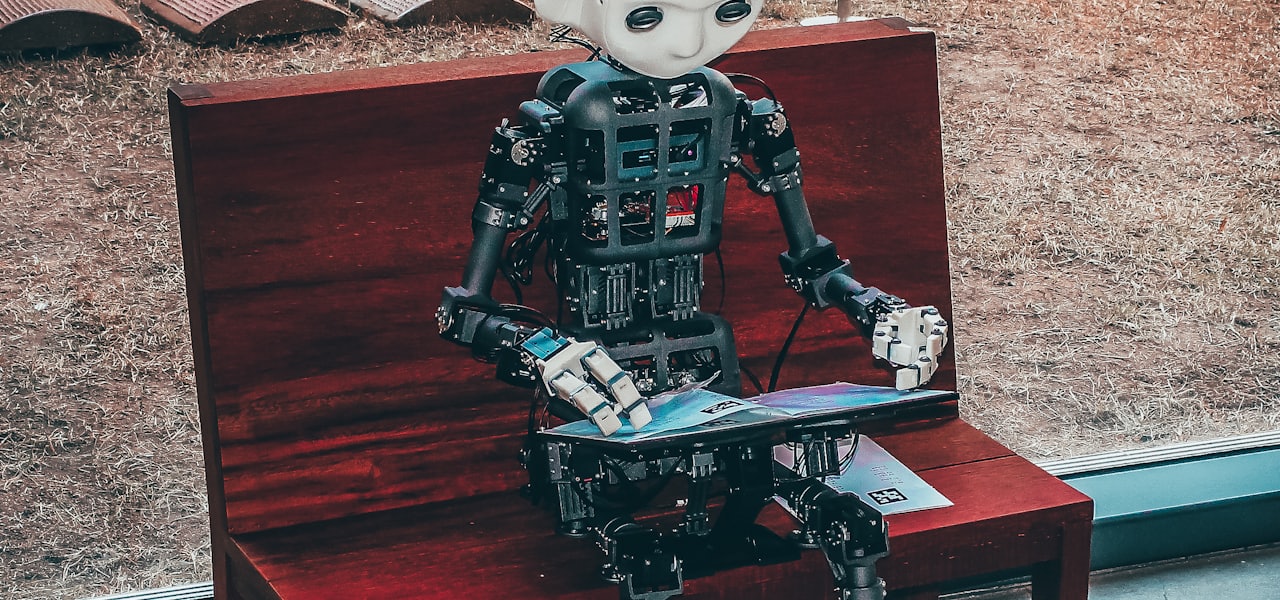
In the philosophy of artificial intelligence, GOFAI (good old-fashioned artificial intelligence) is classical symbolic AI, as opposed to other approaches, such as neural networks, situated robotics, narrow symbolic AI or neuro-symbolic AI. The term was coined by philosopher John Haugeland in his 1985 book Artificial Intelligence: The Very Idea. Haugeland coined the term to address two questions: Can GOFAI produce human-level artificial intelligence in a machine? Is GOFAI the primary method that brains use to display intelligence? AI founder Herbert A. Simon speculated in 1963 that the answers to both these questions was "yes". His evidence was the performance of programs he had co-written, such as Logic Theorist and the General Problem Solver, and his psychological research on human problem solving. AI research in the 1950s and 60s had an enormous influence on intellectual history: it inspired the cognitive revolution, led to the founding of the academic field of cognitive science, and was the essential example in the philosophical theories of computationalism, functionalism and cognitivism in ethics and the psychological theories of cognitivism and cognitive psychology. The specific aspect of AI research that led to this revolution was what Haugeland called "GOFAI". In AI development and technology, GOFAI is used to refer to programs that are built with deliberate, explicit instructions for a single task. This is in contrast to approaches that use machine learning. Examples of GOFAI applications include AlphaGo and Apple's initial Siri design. == Western rationalism == Haugeland places GOFAI within the rationalist tradition in western philosophy, which holds that abstract reason is the "highest" faculty, that it is what separates man from the animals, and that it is the most essential part of our intelligence. This assumption is present in Plato and Aristotle, in Shakespeare, Hobbes, Hume and Locke, it was central to the Enlightenment, to the logical positivists of the 1930s, and to the computationalists and cognitivists of the 1960s. As Shakespeare wrote: What a piece of work is a man, How noble in reason, how infinite in faculty ... In apprehension how like a god, The beauty of the world, The paragon of animals. Symbolic AI in the 1960s was able to successfully simulate the process of high-level reasoning, including logical deduction, algebra, geometry, spatial reasoning and means-ends analysis, all of them in precise English sentences, just like the ones humans used when they reasoned. Many observers, including philosophers, psychologists and the AI researchers themselves became convinced that they had captured the essential features of intelligence. This was not just hubris or speculation -- this was entailed by rationalism. If it was not true, then it brings into question a large part of the entire Western philosophical tradition. Continental philosophy, which included Nietzsche, Husserl, Heidegger and others, rejected rationalism and argued that our high-level reasoning was limited and prone to error, and that most of our abilities come from our intuitions, culture, and instinctive feel for the situation. Philosophers who were familiar with this tradition were the first to criticize GOFAI and the assertion that it was sufficient for intelligence, such as Hubert Dreyfus and Haugeland. == Haugeland's GOFAI == Critics and supporters of Haugeland's position, from philosophy, psychology, or AI research have found it difficult to define "GOFAI" precisely, and thus the literature contains a variety of interpretations. Drew McDermott, for example, finds Haugeland's description of GOFAI "incoherent" and argues that GOFAI is a "myth". Haugeland coined the term GOFAI in order to examine the philosophical implications of “the claims essential to all GOFAI theories”, which he listed as: 1. our ability to deal with things intelligently is due to our capacity to think about them reasonably (including sub-conscious thinking); and 2. our capacity to think about things reasonably amounts to a faculty for internal “automatic” symbol manipulation This is very similar to the sufficient side of the physical symbol systems hypothesis proposed by Herbert A. Simon and Allen Newell in 1963: "A physical symbol system has the necessary and sufficient means for general intelligent action." It is also similar to Hubert Dreyfus' "psychological assumption": "The mind can be viewed as a device operating on bits of information according to formal rules. " Haugeland's description of GOFAI refers to symbol manipulation governed by a set of instructions for manipulating the symbols. The "symbols" he refers to are discrete physical things that are assigned a definite semantics -- like
Roadie (app)
Roadie Inc. is an American package delivery company for business and private same-day, urgent and scheduled delivery in the United States. The company was founded in 2014 and launched its web and mobile apps in January 2015. As of September 2021, it reported having over 200,000 drivers covering more than 20,000 zip codes. Roadie states it matches gig drivers with deliveries that are directed along the routes they plan to travel. Major customers include The Home Depot, Walmart, Tractor Supply Company, Best Buy and Delta Air Lines. In September 2021, UPS entered into an agreement to acquire Roadie for an undisclosed amount with the transaction expected to be closed in the fourth quarter. == History == Roadie was founded by Marc Gorlin, a co-founder of Kabbage and founder of VerticalOne and Pretty Good Privacy, as a same-day and urgent delivery company in 2014. In January 2015, Roadie launched the first consumer to consumer (C2C) version of its app with a Series A funding round of $10 million. In February, Roadie announced a partnership with Waffle House to designate its restaurants "Roadie Roadhouses", offering a neutral meeting place for drivers and senders. Drivers receive free food and drink through the partnership. In May, late-night host Jimmy Kimmel discussed the Roadie-Waffle House relationship in an opening monologue on Jimmy Kimmel Live!. Roadie's driver network expanded significantly as a result. Roadie closed a Series B round of funding in June, raising $15 million, and its first business to business (B2B) app version launched that November. In 2015, Delta Air Lines signed an agreement with Roadie to deliver mishandled luggage, becoming Roadie’s first enterprise customer. Roadie launched a pilot program with Delta at Daytona Beach International Airport. Since then, the relationship has expanded to include over 70 airports around the United States and a first mile/last mile line haul relationship with Delta Cargo. In 2017, the company signed a deal with The Home Depot, also based in Atlanta, and in February 2019, closed a Series C round of funding. In October 2019, Roadie and Delta Cargo announced a partnership to create a same-day cross-country delivery offering, DASH Door-to-Door, the first of its kind from a U.S. passenger airline. Tractor Supply Company became the first general merchandise retailer to offer same-day delivery from every store in April 2020 through Roadie. In September 2021, UPS entered an agreement to acquire Roadie for an undisclosed amount. The transaction was expected to close in the fourth quarter of 2021. Roadies, which at the time reported having 200,000 operators serving over 20,000 ZIP Codes, was expected to continue operations under its name as a separate company with no transfer of packages between the UPS and Roadies networks. The relationship between the companies goes back several years with UPS being an early investor. Earlier in 2021, UPS had begun a pilot program testing same-day deliveries via Roadies. == Operations == === On-the-way model === Roadie’s app works by connecting drivers with senders, businesses or consumers who have items that need to be delivered. Deliveries within the app are referred to as "Gigs", which Gorlin said was inspired by live music road crews, also known as roadies. A sender creates a Gig on Roadie's web app or via its API. Drivers then review deliveries in their area on their mobile app and may choose to offer to take on individual or groups of deliveries along the same route. Gigs are then assigned to drivers by Roadie's algorithm. According to the company, this model encourages drivers to choose Gigs that align with their planned schedules and routes. Roadie calls this its "on-the-way" delivery model. The go-to-market approach taken by Roadie also differs from its competitors. Rather than launching in major cities and sequentially adding new markets city-by-city, Roadie launched nationwide from its inception. The company relies on retail and airline partners to drive volume of deliveries in individual markets, which in turn builds up a network of drivers in those areas, making it easier for small businesses and consumers to send deliveries as well. This strategy allows Roadie to reach smaller cities and towns in rural or exurban communities, traditionally difficult markets for delivery providers to serve. === Service lines === Roadie’s platform is most popular for same-day, on-demand or scheduled first mile/last mile delivery, especially delivery from stores and warehouses. Some retailers also use it for returns and reverse logistics, moving inventory, and hot shot shipping. Roadie operates 1-hour grocery delivery for Walmart, and delivers perishable food items for others including small, independent retailers. The on-the-way model complements the grocery industry’s just in time model, making last-mile deliveries that do not break the cold chain. === Cross-country same-day delivery === In October 2019, Roadie and Delta Cargo launched DASH Door-to-Door, a 24/7 door-to-door pick-up and delivery service. Roadie handles the first and last mile and Delta manages the line haul via passenger flights. The service launched originally from Atlanta to 55 cities and is an industry-first for a US commercial airline. === Promotion, awards and corporate citizenship === In September 2015, Roadie announced a partnership with Atlanta-based musician Ludacris, to promote the app. Following the devastation caused by flooding in Baton Rouge in 2016, Roadie offered free pickup and delivery for all deliveries traveling to and from the Baton Rouge area. In December 2020, Walmart named Roadie its top delivery partner for "Highest Driver Customer Satisfaction" and "Highest Net Promoter Score", after expanding into general merchandise deliveries as well as grocery that same year.
FlowVella
FlowVella (formerly Flowboard) is an interactive presentation platform that includes an iPad/iPhone app, a Mac app and web site for viewing presentations, built first for the iPad and web. FlowVella allows users to create, publish and share presentations through their cloud-based SaaS system. FlowVella allows embedding of text, images, PDFs, video and gallery objects in easy linkable screens, defining modern interactive presentations. FlowVella grew out of Treemo Labs. == History == FlowVella launched as 'Flowboard' on April 18, 2013 after being built for almost a year. FlowVella was incubated out of Treemo Labs, which had years of experience building native apps for iPhone, iPad and Android devices. FlowVella is an iPad app and Mac app where users create, view, publish and share interactive presentations. Presentations are viewable on flowvella.com through a web-based viewer on any device or through the FlowVella native iPad app or Mac app. On December 18, 2014, Flowboard rebranded as FlowVella after a trademark dispute. == Presentation format == FlowVella is an interactive presentation format where instead of single directional slides, presentations are made up of linkable screens with embeddable media and content objects. While 'Flows' can be exported to PDF, they all have a web address and are meant to be viewed via a web browser or the FlowVella native applications. == Revenue model == FlowVella uses the freemium model for its presentation apps. Free users can make 4 public presentations with limited number of screens/slides, but most features are available to try out the software. In 2016, FlowVella introduced a second paid plan called PRO which includes team sharing, tracking and newly introduced 'Kiosk Mode' that launched in March of 2017. == Features == FlowVella is a native iPad app and Mac app which has advantages over web based tools. All downloaded presentations can be viewed offline, without an Internet connection. This includes videos which are enabled by caching the video files into memory. For students, teachers, sales people and all users, this is extremely important because this prevents having a presentation fail because of lack of an Internet connection. Beyond the offline capabilities, there is a trend to build native applications versus HTML5 as noted by Facebook and LinkedIn both rebuilding their mobile apps as 100% native applications.
NCAA transfer portal
The NCAA transfer portal is a National Collegiate Athletic Association (NCAA) application, database, and compliance tool that facilitates student athletes' transfers between member institutions. It is intended to bring greater transparency to the transfer process and to enable student athletes to publicize their desire to transfer. The transfer portal is an NCAA-wide database covering all three NCAA divisions, although most media coverage of the transfer portal involves its use in the top-level Division I (D-I). The portal launched on October 15, 2018. Regulations adopted in 2021 allowed student-athletes in D-I football, men's and women's basketball, men's ice hockey, and baseball to transfer schools using the portal once without sitting out a year. In 2024, the NCAA authorized athletes unlimited transfers. == Process == For Divisions I and II, once an athlete desiring to transfer informs their school; the school must enter the athlete's name in the database within two business days. Then coaches and staff from other universities may contact the athlete about potentially transferring. Before the January 2026 NCAA convention, Division III schools were allowed, but not required, to enter such a student into the portal. A proposal to require use of the portal in that division was approved at the convention. The timeline for D-III members to enter athletes into the portal differs from that of the other divisions. Athletes wishing to enter the portal must first complete an educational module. Once completed, the school has seven calendar days to enter the athlete's transfer request into the portal. == Transfer windows == On August 31, 2022, the D-I board adopted a series of changes to transfer rules, introducing the concept of transfer windows, similar to those used in professional soccer worldwide. Student-athletes who wish to take advantage of the one-time transfer rule must, under normal circumstances, enter the portal within a designated window for their sport. These windows are slightly different for each NCAA sport, but are broadly grouped by the NCAA's three athletic "seasons". At that time, the windows were as follows: Fall sports – A 45-day winter window opening the day after championship selections are made in that sport, and a spring window from May 1–15. According to the NCAA, "reasonable accommodations" would be made for participants in football's FBS and FCS championship games (respectively the College Football Playoff National Championship and Division I Football Championship Game), both of which take place in early January. Participants in those games had a 14-day window opening on the day after the championship game, as well as the spring window. Winter sports – A 60-day window opening the day after championship selections are made in that sport. Spring sports – A winter window from December 1–15, and a 45-day spring window opening the day after championship selections are made in that sport. For sports included in the NCAA Emerging Sports for Women program, transfer windows are the same as those for fully recognized NCAA sports. As with fully recognized NCAA sports, transfer windows linked to championship events open on the day after selections are made for the generally recognized championship events in emerging sports. Student-athletes whose athletic aid is reduced, canceled, or not renewed by their school, as well as those affected by a university's elimination of a sports team, may enter the transfer portal at any time without penalty. A slightly different exception applies to those undergoing a head coaching change; student-athletes so affected in sports other than Division I football can enter the portal within 30 days of the change, starting on the day after the coach's departure is announced. The coaching change window also applied to Division I football before October 2025. Less than a month after transfer windows were adopted, the Division I Council adopted a change that affected only graduate transfers. Student-athletes who are set to graduate with remaining athletic eligibility, and plan to continue competition as postgraduate students, were exempt from transfer windows. They could enter the portal at any time during the academic year, and were not subject to the standard deadlines of May 1 for fall and winter sports and July 1 for spring sports. In April 2024, graduate transfers became subject to the same deadlines as all other transfer students. This change did not affect windows for student-athletes affected by a head coaching change, a loss of athletic aid, or the discontinuation of a team. Because the Ivy League allows neither redshirting nor athletic participation by graduate students, athletes at its member schools who are set to complete four years of attendance but still have remaining athletic eligibility may enter the portal at any time during their fourth academic year of attendance. In October 2024, the Division I Council reduced transfer windows in football and basketball to a total of 30 days. For FBS and FCS football, the fall window opened for 20 days, starting on the Monday after FBS conference championship games. Participants in postseason play had a 5-day window that opened on the day after each team's final game. A 10-day spring window opened in mid-April. In men's and women's basketball, a single 30-day window opens on the day after the second round of each Division I tournament concludes. The existing exceptions regarding head coaching changes, a loss of athletic aid, or the discontinuation of a team remained in place. Almost exactly a year later, Division I adopted more significant changes to the football transfer portal for both FBS and FCS. The previous two windows were abolished and replaced by a single window that opens from January 2–16. Participants in the College Football Playoff National Championship—the only game in FBS or FCS played after the closure of the new window—receive a 5-day window that opens on the day after that game. The window for players undergoing a head coaching change was also reduced. A new window of 15 days opens five calendar days after the hiring or public announcement of a new head coach. Should a school fail to hire or publicly announce a new head coach within 30 days after the previous coach's departure, the window will open on the 31st day after departure, provided that the 31st day is no earlier than January 3. This particular window, also open for 15 days, may open at any time before June 30. No change was announced to the exceptions for those affected by a loss of athletic aid or the discontinuation of a team. == Impact on high school recruiting == Effective July 1, 2025, the NCAA Division I Board of Directors implemented new DI roster limits following the court-approved House settlement. Additionally, according to the NCAA, "NCAA rules for Division I programs will no longer include sport-specific scholarship limits." As a result, many top Division I programs, especially those in power conferences, are relying heavily on the transfer portal to bring in conference- and national-level student-athletes. This shift in recruiting focus has already been exemplified across Division I men's and women's track and field especially, beginning in the recruitment cycle for 2025 college entries. Track and field coaches formerly managing rosters of 120-plus (60-plus men and 60-plus women) are now limited to 45 per side for a total of 90 roster spots across men's and women's track and field, meaning they are recruiting fewer student-athletes out of high school and more immediately impactful scholarship-worthy student-athletes via the transfer portal. Roster limits for track and field teams are even more stringent in the Southeastern Conference (SEC): 35 men and 35 women. For high school track and field athletes seeking opportunities with top DI programs, they no longer need to display potential to be point-scorers, but demonstrate the ability to contribute immediately, often by competing at a level aligned with conference scoring standards.
Anaconda (Python distribution)
Anaconda is an open source data science and artificial intelligence distribution platform for the Python programming language. Developed by Anaconda, Inc., an American company founded in 2012, the platform is used to develop and manage data science and AI projects. In 2024, Anaconda Inc. has about 300 employees and 45 million users. == History == Co-founded in Austin, Texas in 2012 as Continuum Analytics by Peter Wang and Travis Oliphant, Anaconda Inc. operates from the United States and Europe. Anaconda Inc. developed Conda, a cross-platform, language-agnostic binary package manager. It also launched PyData community workshops and the Jupyter Cloud Notebook service (Wakari.io). In 2013, it received funding from DARPA. In 2015, the company had two million users including 200 of the Fortune 500 companies and raised $24 million in a Series A funding round led by General Catalyst and BuildGroup. Anaconda secured an additional $30 million in funding in 2021. Continuum Analytics rebranded as Anaconda in 2017. That year, it announced the release of Anaconda Enterprise 5, an integration with Microsoft Azure, and had over 13 million users by year's end. In 2022, it released Anaconda Business; new integrations with Snowflake and others; and the open-source PyScript. It also acquired PythonAnywhere, while Anaconda's user base exceeded 30 million in 2022. In 2023, Anaconda released Python in Excel, a new integration with Microsoft Excel, and launched PyScript.com. The company made a series of investments in AI during 2024. That February, Anaconda partnered with IBM to import its repository of Python packages into Watsonx, IBM's generative AI platform. The same year, Anaconda joined IBM's AI Alliance and released an integration with Teradata and Lenovo. In 2024, Anaconda's user base reached 45 million users and Barry Libert was named company CEO, after serving on Anaconda's board of directors. He was succeeded as CEO in October 2025 by David DeSanto, who also became a company director. In May 2025, the company introduced the first unified AI platform for Open Source, Anaconda AI Platform, a central control for AI workflows that enables customization in Python-based enterprise AI development. That July, after reaching over $150 million in a Series C funding round, Anaconda was evaluated at about $1.5 billion. == Overview == Anaconda distribution comes with over 300 packages automatically installed, and over 7,500 additional open-source packages can be installed from the Anaconda repository as well as the Conda package and virtual environment manager. It also includes a GUI, Anaconda Navigator, as a graphical alternative to the command-line interface (CLI). Conda was developed to address dependency conflicts native to the pip package manager, which would automatically install any dependent Python packages without checking for conflicts with previously installed packages (until its version 20.3, which later implemented consistent dependency resolution). The Conda package manager's historical differentiation analyzed and resolved these installation conflicts. Anaconda is a distribution of the Python programming language (and previously also R) for scientific computing (data science, machine learning applications, large-scale data processing, predictive analytics, etc.), that aims to simplify package management and deployment. Anaconda distribution includes data-science packages suitable for Windows, Linux, and macOS. Other company products include Anaconda Free, and subscription-based Starter, Business and Enterprise. Anaconda's business tier offers Package Security Manager. Package versions in Anaconda are managed by the package management system Conda, which was spun out as a separate open-source package as useful both independently and for applications other than Python. There is also a small, bootstrap version of Anaconda called Miniconda, which includes only Conda, Python, the packages they depend on, and a small number of other packages. Open source packages can be individually installed from the Anaconda repository, Anaconda Cloud (anaconda.org), or the user's own private repository or mirror, using the conda install command. Anaconda, Inc. compiles and builds the packages available in the Anaconda repository itself, and provides binaries for Windows 32/64 bit, Linux 64 bit and MacOS 64-bit (Intel, Apple Silicon). Anything available on PyPI may be installed into a Conda environment using pip, and Conda will keep track of what it has installed and what pip has installed. Custom packages can be made using the conda build command, and can be shared with others by uploading them to Anaconda Cloud, PyPI or other repositories. The default installation of Anaconda2 includes Python 2.7 and Anaconda3 includes Python 3.7. However, it is possible to create new environments that include any version of Python packaged with Conda. === Anaconda Navigator === Anaconda Navigator is a desktop graphical user interface (GUI) included in Anaconda distribution that allows users to launch applications and manage Conda packages, environments and channels without using command-line commands. Navigator can search for packages on Anaconda Cloud or in a local Anaconda Repository, install them in an environment, run the packages and update them. It is available for Windows, macOS and Linux. The following applications are available by default in Navigator: JupyterLab Jupyter Notebook QtConsole Spyder Glue Orange RStudio Visual Studio Code === Conda === Conda is an open source, cross-platform, language-agnostic package manager and environment management system that installs, runs, and updates packages and their dependencies. It was created for Python programs, but it can package and distribute software for any language, including multi-language projects. The Conda package and environment manager is included in all versions of Anaconda, Miniconda, and Anaconda Repository. == Anaconda.org == Anaconda Cloud is a package management service by Anaconda where users can find, access, store and share public and private notebooks, environments, and Conda and PyPI packages. Cloud hosts useful Python packages, notebooks and environments for a wide variety of applications. Users do not need to log in or to have a Cloud account, to search for public packages, download and install them. Users can build new Conda packages using Conda-build and then use the Anaconda Client CLI to upload packages to Anaconda.org. Notebooks users can be aided with writing and debugging code with Anaconda's AI Assistant.
Sentence extraction
Sentence extraction is a technique used for automatic summarization of a text. In this shallow approach, statistical heuristics are used to identify the most salient sentences of a text. Sentence extraction is a low-cost approach compared to more knowledge-intensive deeper approaches which require additional knowledge bases such as ontologies or linguistic knowledge. In short, sentence extraction works as a filter that allows only meaningful sentences to pass. The major downside of applying sentence-extraction techniques to the task of summarization is the loss of coherence in the resulting summary. Nevertheless, sentence extraction summaries can give valuable clues to the main points of a document and are frequently sufficiently intelligible to human readers. == Procedure == Usually, a combination of heuristics is used to determine the most important sentences within the document. Each heuristic assigns a (positive or negative) score to the sentence. After all heuristics have been applied, the highest-scoring sentences are included in the summary. The individual heuristics are weighted according to their importance. === Early approaches and some sample heuristics === Seminal papers which laid the foundations for many techniques used today have been published by Hans Peter Luhn in 1958 and H. P Edmundson in 1969. Luhn proposed to assign more weight to sentences at the beginning of the document or a paragraph. Edmundson stressed the importance of title-words for summarization and was the first to employ stop-lists in order to filter uninformative words of low semantic content (e.g. most grammatical words such as of, the, a). He also distinguished between bonus words and stigma words, i.e. words that probably occur together with important (e.g. the word form significant) or unimportant information. His idea of using key-words, i.e. words which occur significantly frequently in the document, is still one of the core heuristics of today's summarizers. With large linguistic corpora available today, the tf–idf value which originated in information retrieval, can be successfully applied to identify the key words of a text: If for example the word cat occurs significantly more often in the text to be summarized (TF = "term frequency") than in the corpus (IDF means "inverse document frequency"; here the corpus is meant by document), then cat is likely to be an important word of the text; the text may in fact be a text about cats.
KeyBase
KeyBase is a database and web application for managing and deploying interactive taxonomic keys for plants and animals developed by the Royal Botanic Gardens Victoria. KeyBase provides a medium where pathway keys which were traditionally developed for print and other classical types of media, can be used more effectively in the internet environment. The platform uses a concept called "keys" which can be easily linked together, joined with other keys, or merged into larger other seamless keys groups, with each still available to be browsed independently. Keys in the KeyBase database can be filtered and displayed in a variety of ways, filters, and formats.