TensorFlow Hub (also styled TF Hub) is an open-source machine learning library and online repository that provides TensorFlow model components, called modules. It is maintained by Google as part of the TensorFlow ecosystem and allows developers to discover, publish, and reuse pretrained models for tasks such as computer vision, natural language processing, and transfer learning. == Overview == TensorFlow Hub provides a central platform where developers and researchers can access pre-trained models and integrate them directly into TensorFlow workflows. Each module encapsulates a computation graph and its trained weights, with standardized input and output signatures. Modules can be loaded using the hub.load() function or through Keras integration via hub.KerasLayer, enabling users to perform transfer learning or feature extraction. == History == TensorFlow Hub was announced by Google in March 2018, with the first public version released shortly after. Its introduction coincided with the growing adoption of transfer learning techniques and the need for standardized model packaging. Over time, the hub expanded to include models such as the BERT family, MobileNet, EfficientNet, and the Universal Sentence Encoder. In 2020, research on “Regret selection in TensorFlow Hub” explored the problem of identifying optimal models for downstream tasks given a large repository of alternatives. == Applications == TensorFlow Hub hosts a variety of models across machine learning domains: Natural language processing: BERT, ALBERT language model, and Universal Sentence Encoder. Computer vision: ResNet, Inception (deep learning), MobileNet, EfficientNet. Speech and audio: spectrogram feature extractors and automatic speech recognition models. Multilingual embeddings: cross-lingual and sentence-level representations for machine translation and semantic similarity. Modules are widely used in education, academic research, and industry for prototyping and production deployment.
Multi-focus image fusion
Multi-focus image fusion is a multiple image compression technique using input images with different focus depths to make one output image that preserves all information. == Overview == The main idea of image fusion is gathering important and the essential information from the input images into one single image which ideally has all of the information of the input images. The research history of image fusion spans over 30 years and many scientific papers. Image fusion generally has two aspects: image fusion methods and objective evaluation metrics. In visual sensor networks (VSN), sensors are cameras which record images and video sequences. In many applications of VSN, a camera can't give a perfect illustration including all details of the scene. This is because of the limited depth of focus of the optical lens of cameras. Therefore, just the object located in the focal length of camera is focused and clear, and other parts of the image are blurred. VSN captures images with different depths of focus using several cameras. Due to the large amount of data generated by cameras compared to other sensors such as pressure and temperature sensors and some limitations of bandwidth, energy consumption and processing time, it is essential to process the local input images to decrease the amount of transmitted data. == Multi-Focus image fusion in the spatial domain == Huang and Jing have reviewed and applied several focus measurements in the spatial domain for the multi-focus image fusion process, suitable for real-time applications. They mentioned some focus measurements including variance, energy of image gradient (EOG), Tenenbaum's algorithm (Tenengrad), energy of Laplacian (EOL), sum-modified-Laplacian (SML), and spatial frequency (SF). Their experiments showed that EOL gave better results than other methods like variance and spatial frequency. == Multi-Focus image fusion in multi-scale transform and DCT domain == Image fusion based on the multi-scale transform is the most commonly used and promising technique. Laplacian pyramid transform, gradient pyramid-based transform, morphological pyramid transform and the premier ones, discrete wavelet transform, shift-invariant wavelet transform (SIDWT), and discrete cosine harmonic wavelet transform (DCHWT) are some examples of image fusion methods based on multi-scale transform. These methods are complex and have some limitations e.g. processing time and energy consumption. For example, multi-focus image fusion methods based on DWT require a lot of convolution operations, so they take more time and energy to process. Therefore, most methods in multi-scale transform are not suitable for real-time applications. Moreover, these methods are not very successful along edges, due to the wavelet transform process missing the edges of the image. They create ringing artefacts in the output image and reduce its quality. Due to the aforementioned problems in the multi-scale transform methods, researchers are interested in multi-focus image fusion in the DCT domain. DCT-based methods are more efficient in terms of transmission and archiving images coded in Joint Photographic Experts Group (JPEG) standard to the upper node in the VSN agent. A JPEG system consists of a pair of an encoder and a decoder. In the encoder, images are divided into non-overlapping 8×8 blocks, and the DCT coefficients are calculated for each. Since the quantization of DCT coefficients is a lossy process, many of the small-valued DCT coefficients are quantized to zero, which corresponds to high frequencies. DCT-based image fusion algorithms work better when the multi-focus image fusion methods are applied in the compressed domain. In addition, in the spatial-based methods, the input images must be decoded and then transferred to the spatial domain. After implementation of the image fusion operations, the output fused images must again be encoded. DCT domain-based methods do not require complex and time-consuming consecutive decoding and encoding operations. Therefore, the image fusion methods based on DCT domain operate with much less energy and processing time. Recently, a lot of research has been carried out in the DCT domain. DCT+Variance, DCT+Corr_Eng, DCT+EOL, and DCT+VOL are some prominent examples of DCT based methods.
Behavior-based robotics
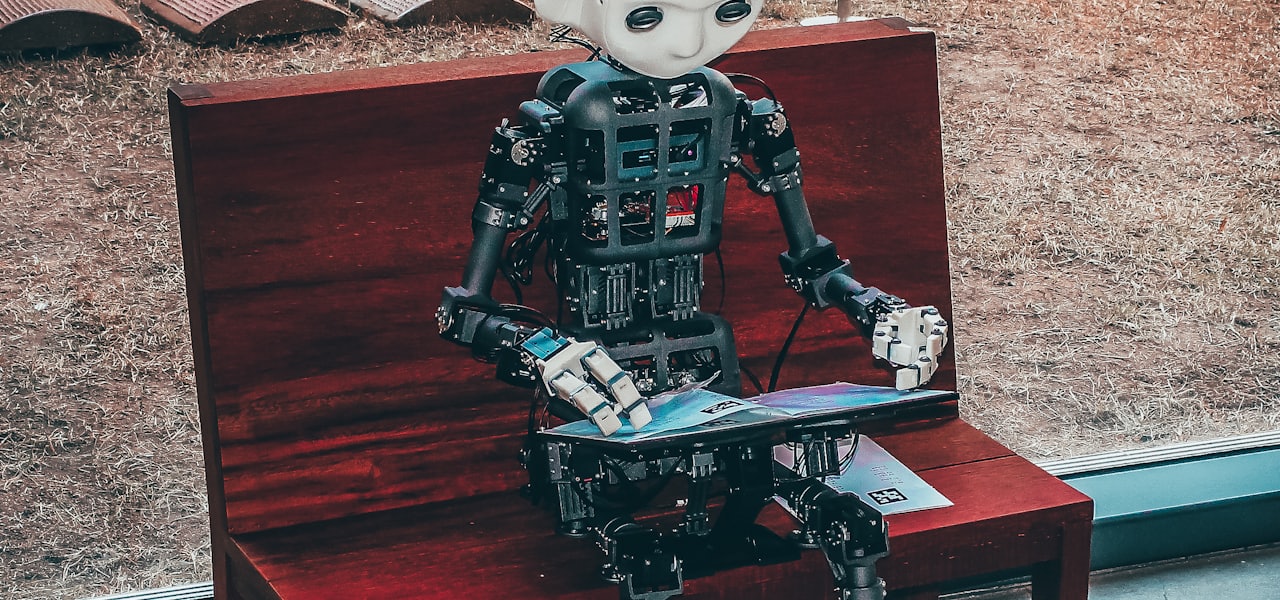
Behavior-based robotics (BBR) or behavioral robotics is an approach in robotics that focuses on robots that are able to exhibit complex-appearing behaviors despite little internal variable state to model its immediate environment, mostly gradually correcting its actions via sensory-motor links. == Principles == Behavior-based robotics sets itself apart from traditional artificial intelligence by using biological systems as a model. Classic artificial intelligence typically uses a set of steps to solve problems, it follows a path based on internal representations of events compared to the behavior-based approach. Rather than use preset calculations to tackle a situation, behavior-based robotics relies on adaptability. This advancement has allowed behavior-based robotics to become commonplace in researching and data gathering. Most behavior-based systems are also reactive, which means they need no programming of what a chair looks like, or what kind of surface the robot is moving on. Instead, all the information is gleaned from the input of the robot's sensors. The robot uses that information to gradually correct its actions according to the changes in immediate environment. Behavior-based robots (BBR) usually show more biological-appearing actions than their computing-intensive counterparts, which are very deliberate in their actions. A BBR often makes mistakes, repeats actions, and appears confused, but can also show the anthropomorphic quality of tenacity. Comparisons between BBRs and insects are frequent because of these actions. BBRs are sometimes considered examples of weak artificial intelligence, although some have claimed they are models of all intelligence. == Features == Most behavior-based robots are programmed with a basic set of features to start them off. They are given a behavioral repertoire to work with dictating what behaviors to use and when, obstacle avoidance and battery charging can provide a foundation to help the robots learn and succeed. Rather than build world models, behavior-based robots simply react to their environment and problems within that environment. They draw upon internal knowledge learned from their past experiences combined with their basic behaviors to resolve problems. == History == The school of behavior-based robots owes much to work undertaken in the 1980s at the Massachusetts Institute of Technology by Rodney Brooks, who with students and colleagues built a series of wheeled and legged robots utilizing the subsumption architecture. Brooks' papers, often written with lighthearted titles such as "Planning is just a way of avoiding figuring out what to do next", the anthropomorphic qualities of his robots, and the relatively low cost of developing such robots, popularized the behavior-based approach. Brooks' work builds—whether by accident or not—on two prior milestones in the behavior-based approach. In the 1950s, W. Grey Walter, an English scientist with a background in neurological research, built a pair of vacuum tube-based robots that were exhibited at the 1951 Festival of Britain, and which have simple but effective behavior-based control systems. The second milestone is Valentino Braitenberg's 1984 book, "Vehicles – Experiments in Synthetic Psychology" (MIT Press). He describes a series of thought experiments demonstrating how simply wired sensor/motor connections can result in some complex-appearing behaviors such as fear and love. Later work in BBR is from the BEAM robotics community, which has built upon the work of Mark Tilden. Tilden was inspired by the reduction in the computational power needed for walking mechanisms from Brooks' experiments (which used one microcontroller for each leg), and further reduced the computational requirements to that of logic chips, transistor-based electronics, and analog circuit design. A different direction of development includes extensions of behavior-based robotics to multi-robot teams. The focus in this work is on developing simple generic mechanisms that result in coordinated group behavior, either implicitly or explicitly.
Cybernetics
Cybernetics is the transdisciplinary study of circular causal processes such as feedback and recursion, where the effects of a system's actions (its outputs) return as inputs to that system, influencing subsequent actions. It is concerned with general principles that are relevant across multiple contexts, including engineering, ecological, economic, biological, cognitive and social systems and also in practical activities such as designing, learning, and managing. Cybernetics' transdisciplinary character means that it intersects with a number of other fields, resulting in a wide influence and diverse interpretations. The field is named after an example of circular causal feedback—that of steering a ship (the ancient Greek κυβερνήτης (kybernḗtēs) refers to the person who steers a ship). In steering a ship, the position of the rudder is adjusted in continual response to the effect it is observed as having, forming a feedback loop through which a steady course can be maintained in a changing environment, responding to disturbances from cross winds and tide. Cybernetics has its origins in exchanges between numerous disciplines during the 1940s. Initial developments were consolidated through meetings such as the Macy conferences and the Ratio Club. Early focuses included purposeful behaviour, neural networks, heterarchy, information theory, and self-organising systems. As cybernetics developed, it became broader in scope to include work in design, family therapy, management and organisation, pedagogy, sociology, the creative arts and the counterculture. == Definitions == Cybernetics has been defined in a variety of ways, reflecting "the richness of its conceptual base". One of the best known definitions is that of the American scientist Norbert Wiener, who characterised cybernetics as concerned with "control and communication in the animal and the machine". Another early definition is that of the Macy cybernetics conferences, where cybernetics was understood as the study of "circular causal and feedback mechanisms in biological and social systems". Margaret Mead emphasised the role of cybernetics as "a form of cross-disciplinary thought which made it possible for members of many disciplines to communicate with each other easily in a language which all could understand". Other definitions include: "the art of governing or the science of government" (André-Marie Ampère); "the art of steersmanship" (Ross Ashby); "the study of systems of any nature which are capable of receiving, storing, and processing information so as to use it for control" (Andrey Kolmogorov); and "a branch of mathematics dealing with problems of control, recursiveness, and information, focuses on forms and the patterns that connect" (Gregory Bateson). == Etymology == The Ancient Greek term κυβερνητικός (kubernētikos, '(good at) steering') appears in Plato's Republic and Alcibiades, where the metaphor of a steersman is used to signify the governance of people. The French word cybernétique was also used in 1834 by the physicist André-Marie Ampère to denote the sciences of government in his classification system of human knowledge. According to Norbert Wiener, the word cybernetics was coined by a research group involving himself and Arturo Rosenblueth in the summer of 1947. It has been attested in print since at least 1948 through Wiener's book Cybernetics: Or Control and Communication in the Animal and the Machine. In the book, Wiener states: After much consideration, we have come to the conclusion that all the existing terminology has too heavy a bias to one side or another to serve the future development of the field as well as it should; and as happens so often to scientists, we have been forced to coin at least one artificial neo-Greek expression to fill the gap. We have decided to call the entire field of control and communication theory, whether in the machine or in the animal, by the name Cybernetics, which we form from the Greek κυβερνήτης or steersman. Moreover, Wiener explains, the term was chosen to recognize James Clerk Maxwell's 1868 publication on feedback mechanisms involving governors, noting that the term governor is also derived from κυβερνήτης (kubernḗtēs) via a Latin corruption gubernator. Finally, Wiener motivates the choice by steering engines of a ship being "one of the earliest and best-developed forms of feedback mechanisms". == History == === First wave === The initial focus of cybernetics was on parallels between regulatory feedback processes in biological and technological systems. Two foundational articles were published in 1943: "Behavior, Purpose and Teleology" by Arturo Rosenblueth, Norbert Wiener, and Julian Bigelow – based on the research on living organisms that Rosenblueth did in Mexico – and the paper "A Logical Calculus of the Ideas Immanent in Nervous Activity" by Warren McCulloch and Walter Pitts. The foundations of cybernetics were then developed through a series of transdisciplinary conferences funded by the Josiah Macy, Jr. Foundation, between 1946 and 1953. The conferences were chaired by McCulloch and had participants that included Ross Ashby, Gregory Bateson, Heinz von Foerster, Margaret Mead, John von Neumann, and Norbert Wiener. In the UK, similar focuses were explored by the Ratio Club, an informal dining club of young psychiatrists, psychologists, physiologists, mathematicians and engineers that met between 1949 and 1958. Wiener introduced the neologism cybernetics to denote the study of "teleological mechanisms" and popularized it through the book Cybernetics: Or Control and Communication in the Animal and the Machine. During the 1950s, cybernetics was developed as a primarily technical discipline, such as in Qian Xuesen's 1954 "Engineering Cybernetics". The text was quickly translated into multiple languages and became a foundational text on automation. In the Soviet Union, Cybernetics was initially considered with suspicion but became accepted from the mid to late 1950s. By the 1960s and 1970s, however, cybernetics' transdisciplinarity fragmented, with technical focuses separating into separate fields. Artificial intelligence (AI) was founded as a distinct discipline at the Dartmouth workshop in 1956, differentiating itself from the broader cybernetics field. After some uneasy coexistence, AI gained funding and prominence. Consequently, cybernetic sciences such as the study of artificial neural networks were downplayed. Similarly, computer science became defined as a distinct academic discipline in the 1950s and early 1960s. === Second wave === The second wave of cybernetics came to prominence from the 1960s onwards, with its focus shifting away from technology toward social, ecological, and philosophical concerns. It was still grounded in biology, notably Maturana and Varela's autopoiesis, and built on earlier work on self-organising systems and the presence of anthropologists Mead and Bateson in the Macy meetings. The Biological Computer Laboratory, founded in 1958 and active until the mid-1970s under the direction of Heinz von Foerster at the University of Illinois at Urbana–Champaign, was a major incubator of this trend in cybernetics research. Focuses of the second wave of cybernetics included management cybernetics, such as Stafford Beer's biologically inspired viable system model; work in family therapy, drawing on Bateson; social systems, such as in the work of Niklas Luhmann; epistemology and pedagogy, such as in the development of radical constructivism. Cybernetics' core theme of circular causality was developed beyond goal-oriented processes to concerns with reflexivity and recursion, notably in Mead's invocation at the inaugural meeting of the American Society for Cybernetics (ASC) to apply cybernetics to the activities of the ASC itself. This focus on reflexivity was especially prominent in the development of second-order cybernetics (or the cybernetics of cybernetics), developed and promoted by Heinz von Foerster, which focused on questions of observation, cognition, epistemology, and ethics. The 1960s onwards also saw cybernetics begin to develop exchanges with the creative arts, design, and architecture, notably with the Cybernetic Serendipity exhibition (ICA, London, 1968), curated by Jasia Reichardt, and the unrealised Fun Palace project (London, unrealised, 1964 onwards), where Gordon Pask was consultant to architect Cedric Price and theatre director Joan Littlewood. In 1962, Qian Xuesen recruited Song Jian and Guan Zhaozhi to establish China's first cybernetics laboratory with him. Following the Sino-Soviet split, cybernetics was deemed disreputable in China. The field was again favored in the 1970s and 1980s following Deng Xiaoping's emphasis on modernisation. === Third wave === From the 1990s onwards, there has been a renewed interest in cybernetics from a number of directions. Early cybernetic work on artificial neural networks has been returned to as a paradigm in machine learning and artifi
Distribution management system
A distribution management system (DMS) is a collection of applications designed to monitor and control the electric power distribution networks efficiently and reliably. It acts as a decision support system to assist the control room and field operating personnel with the monitoring and control of the electric distribution system. Improving the reliability and quality of service in terms of reducing power outages, minimizing outage time, maintaining acceptable frequency and voltage levels are the key deliverables of a DMS. Given the complexity of distribution grids, such systems may involve communication and coordination across multiple components. For example, the control of active loads may require a complex chain of communication through different components as described in US patent 11747849B2 In recent years, utilization of electrical energy increased exponentially and customer requirement and quality definitions of power were changed enormously. As electric energy became an essential part of daily life, its optimal usage and reliability became important. Real-time network view and dynamic decisions have become instrumental for optimizing resources and managing demands, leading to the need for distribution management systems in large-scale electrical networks. == Overview == Most distribution utilities have been comprehensively using IT solutions through their Outage Management System (OMS) that makes use of other systems like Customer Information System (CIS), Geographical Information System (GIS) and Interactive Voice Response System (IVRS). An outage management system has a network component/connectivity model of the distribution system. By combining the locations of outage calls from customers with knowledge of the locations of the protection devices (such as circuit breakers) on the network, a rule engine is used to predict the locations of outages. Based on this, restoration activities are charted out and the crew is dispatched for the same. In parallel with this, distribution utilities began to roll out Supervisory Control and Data Acquisition (SCADA) systems, initially only at their higher voltage substations. Over time, use of SCADA has progressively extended downwards to sites at lower voltage levels. DMSs access real-time data and provide all information on a single console at the control centre in an integrated manner. Their development varied across different geographic territories. In the US, for example, DMSs typically grew by taking Outage Management Systems to the next level, automating the complete sequences and providing an end to end, integrated view of the entire distribution spectrum. In the UK, by contrast, the much denser and more meshed network topologies, combined with stronger Health & Safety regulation, had led to early centralisation of high-voltage switching operations, initially using paper records and schematic diagrams printed onto large wallboards which were 'dressed' with magnetic symbols to show the current running states. There, DMSs grew initially from SCADA systems as these were expanded to allow these centralised control and safety management procedures to be managed electronically. These DMSs required even more detailed component/connectivity models and schematics than those needed by early OMSs as every possible isolation and earthing point on the networks had to be included. In territories such as the UK, therefore, the network component/connectivity models were usually developed in the DMS first, whereas in the USA these were generally built in the GIS. The typical data flow in a DMS has the SCADA system, the Information Storage & Retrieval (ISR) system, Communication (COM) Servers, Front-End Processors (FEPs) & Field Remote Terminal Units (FRTUs). == Why DMS? == Reduce the duration of outages Improve the speed and accuracy of outage predictions. Reduce crew patrol and drive times through improved outage locating. Improve the operational efficiency Determine the crew resources necessary to achieve restoration objectives. Effectively utilize resources between operating regions. Determine when best to schedule mutual aid crews. Increased customer satisfaction A DMS incorporates IVR and other mobile technologies, through which there is an improved outage communications for customer calls. Provide customers with more accurate estimated restoration times. Improve service reliability by tracking all customers affected by an outage, determining electrical configurations of every device on every feeder, and compiling details about each restoration process. == DMS Functions == In order to support proper decision making and O&M activities, DMS solutions should support the following functions: Network visualization & support tools Applications for Analytical & Remedial Action Utility Planning Tools System Protection Schemes The various sub functions of the same, carried out by the DMS are listed below:- === Network Connectivity Analysis (NCA) === Distribution network usually covers over a large area and catering power to different customers at different voltage levels. So locating required sources and loads on a larger GIS/Operator interface is often very difficult. Panning & zooming provided with normal SCADA system GUI does not cover the exact operational requirement. Network connectivity analysis is an operator specific functionality which helps the operator to identify or locate the preferred network or component very easily. NCA does the required analyses and provides display of the feed point of various network loads. Based on the status of all the switching devices such as circuit breaker (CB), Ring Main Unit (RMU) and/or isolators that affect the topology of the network modeled, the prevailing network topology is determined. The NCA further assists the operator to know operating state of the distribution network indicating radial mode, loops and parallels in the network. === Switching Schedule & Safety Management === In territories such as the UK a core function of a DMS has always been to support safe switching and work on the networks. Control engineers prepare switching schedules to isolate and make safe a section of network before work is carried out, and the DMS validates these schedules using its network model. Switching schedules can combine telecontrolled and manual (on-site) switching operations. When the required section has been made safe, the DMS allows a Permit To Work (PTW) document to be issued. After its cancellation when the work has been finished, the switching schedule then facilitates restoration of the normal running arrangements. Switching components can also be tagged to reflect any Operational Restrictions that are in force. The network component/connectivity model, and associated diagrams, must always be kept absolutely up to date. The switching schedule facility therefore also allows 'patches' to the network model to be applied to the live version at the appropriate stage(s) of the jobs. The term 'patch' is derived from the method previously used to maintain the wallboard diagrams. === State Estimation (SE) === The state estimator is an integral part of the overall monitoring and control systems for transmission networks. It is mainly aimed at providing a reliable estimate of the system voltages. This information from the state estimator flows to control centers and database servers across the network. The variables of interest are indicative of parameters like margins to operating limits, health of equipment and required operator action. State estimators allow the calculation of these variables of interest with high confidence despite the facts that the measurements may be corrupted by noise, or could be missing or inaccurate. Even though we may not be able to directly observe the state, it can be inferred from a scan of measurements which are assumed to be synchronized. The algorithms need to allow for the fact that presence of noise might skew the measurements. In a typical power system, the State is quasi-static. The time constants are sufficiently fast so that system dynamics decay away quickly (with respect to measurement frequency). The system appears to be progressing through a sequence of static states that are driven by various parameters like changes in load profile. The inputs of the state estimator can be given to various applications like Load Flow Analysis, Contingency Analysis, and other applications. === Load Flow Applications (LFA) === Load flow study is an important tool involving numerical analysis applied to a power system. The load flow study usually uses simplified notations like a single-line diagram and focuses on various forms of AC power rather than voltage and current. It analyzes the power systems in normal steady-state operation. The goal of a power flow study is to obtain complete voltage angle and magnitude information for each bus in a power system for specified load and generator real power and voltage conditions. Once this
Cyborg
A cyborg () is a being with both organic and biomechatronic body parts. It is a portmanteau of cybernetic and organism. The term was coined in 1960 by Manfred Clynes and Nathan S. Kline. In contrast to biorobots and androids, the term cyborg applies to a living organism that has undergone restoration of function or enhancements of abilities due to the integration of some artificial component or technology that relies on feedback. == Description and definition == Alternative names for a cyborg include cybernetic organism, cyber-organism, cyber-organic being, cybernetically enhanced organism, cybernetically augmented organism, technorganic being, techno-organic being, and techno-organism. Unlike bionics, biorobotics, or androids, a cyborg is an organism that has restored function or, especially, enhanced abilities due to the integration of some artificial component or technology that relies on some sort of feedback, for example: prostheses, artificial organs, implants or, in some cases, wearable technology. Cyborg technologies may enable or support collective intelligence. A related idea is the "augmented human". While cyborgs are commonly thought of as mammals, including humans, the term can apply to any organism. === Placement and distinctions === D. S. Halacy's Cyborg: Evolution of the Superman (1965) featured an introduction which spoke of a "new frontier" that was "not merely space, but more profoundly the relationship between 'inner space' to 'outer space' – a bridge...between mind and matter." In "A Cyborg Manifesto", Donna Haraway rejects the notion of rigid boundaries between humanity and technology, arguing that, as humans depend on more technology over time, humanity and technology have become too interwoven to draw lines between them. She believes that since we have allowed and created machines and technology to be so advanced, there should be no reason to fear what we have created, and cyborgs should be embraced because they are part of human identities. However, Haraway has also expressed concern over the contradictions of scientific objectivity and the ethics of technological evolution, and has argued that "There are political consequences to scientific accounts of the world." === Biosocial definition === According to some definitions of the term, the physical attachments that humans have with even the most basic technologies have already made them cyborgs. In a typical example, a human with an artificial cardiac pacemaker or implantable cardioverter-defibrillator would be considered a cyborg, since these devices measure voltage potentials in the body, perform signal processing, and can deliver electrical stimuli, using a synthetic feedback mechanism to keep that person alive. Implants, especially cochlear implants, that combine mechanical modification with any kind of feedback response are also cybernetic enhancements. Some theorists cite such modifications as contact lenses, hearing aids, smartphones, or intraocular lenses as examples of fitting humans with technology to enhance their biological capabilities. The emerging trend of implanting microchips inside the body (mainly the hands), to make financial operations like a contactless payment, or basic tasks like opening a door, has been erroneously marketed as more recent examples of cybernetic enhancement. The latter has not yet seen significant traction outside niche areas in Scandinavia and in actual function is little more than a pre-programmed Radio-frequency identification (RFID) microchip encased in glass that does not interact with the human body (it is the same technology used in the microchips injected into animals for ease of identification), thus not fitting the definition of a cybernetic implant. As cyborgs currently are on the rise, some theorists argue there is a need to develop new definitions of aging. For instance, a bio-techno-social definition of aging has been suggested. The term is also used to address human-technology mixtures in the abstract. This includes not only commonly used pieces of technology such as phones, computers, the Internet, and so on, but also artifacts that are not usually considered technology; for example, pen and paper, and speech and language. When augmented with these technologies and connected in communication with people in other times and places, a person becomes capable of more than they were before. An example is a computer, which gains power by using Internet protocols to connect with other computers. Another example is a social-media bot—either a bot-assisted human or a human-assisted-bot—used to target social media with likes and shares. Cybernetic technologies thus include highways, pipes, electrical wiring, buildings, electrical plants, libraries, and other infrastructural constructs. Bruce Sterling, in his Shaper/Mechanist universe, suggested an idea of an alternative cyborg called 'Lobster', which is made not by using internal implants, but by using an external shell (e.g. a powered exoskeleton). The computer game Deus Ex: Invisible War prominently features cyborgs called Omar, Russian for 'lobster'. === Evolutionary perspective === In 1994, Hans Hass formulated a scientific view of the human-machine hybrids he called "hypercells". They can expand their biological cell body with artificial artifacts and thus expand their performance body. The theory of hypercells or Homo proteus, as Hass called the human-machine hybrid to distinguish Homo sapiens, extends Charles Darwin's theory of evolution and deals with the course of evolution beyond humans. In his 2019 book Novacene, James Lovelock used the term "cyborgs" to refer to the next generation of beings who will become the "understanders of the future" and "lead the cosmos to self-knowledge". While acknowledging the organic component in Clynes' and Kline's definition, he proposed that these cyborgs "will have designed and built themselves from the artificial intelligence systems we have already constructed", and used the term cyborg "to emphasize that the new intelligent beings will have arisen, like us, from Darwinian evolution." == Origins == The concept of a man-machine mixture was widespread in science fiction before World War II. As early as 1843, Edgar Allan Poe described a man with extensive prostheses in the short story "The Man That Was Used Up". In 1911, Jean de La Hire introduced the Nyctalope, a science fiction hero who was perhaps the first literary cyborg, in Le Mystère des XV (later translated as The Nyctalope on Mars). Nearly two decades later, Edmond Hamilton presented space explorers with a mixture of organic and machine parts in his 1928 novel The Comet Doom. He later featured the talking, living brain of an old scientist, Simon Wright, floating in a transparent case, and in all the adventures of his famous hero, Captain Future. In 1944, in the short story "No Woman Born", C. L. Moore wrote of Deirdre, a dancer, whose body was burned completely and whose brain was placed in a faceless but beautiful and supple mechanical body. In 1960, the term "cyborg" was coined by Manfred E. Clynes and Nathan S. Kline to refer to their conception of an enhanced human being who could survive in extraterrestrial environments: For the exogenously extended organizational complex functioning as an integrated homeostatic system unconsciously, we propose the term 'Cyborg'. Their concept was the outcome of thinking about the need for an intimate relationship between human and machine as the new frontier of space exploration was beginning to develop. A designer of physiological instrumentation and electronic data-processing systems, Clynes was the chief research scientist in the Dynamic Simulation Laboratory at Rockland State Hospital in New York. The term first appears in print 5 months earlier when The New York Times reported on the "Psychophysiological Aspects of Space Flight Symposium" where Clynes and Kline first presented their paper: A cyborg is essentially a man-machine system in which the control mechanisms of the human portion are modified externally by drugs or regulatory devices so that the being can live in an environment different from the normal one. Thereafter, Hamilton would first use the term "cyborg" explicitly in the 1962 short story, "After a Judgment Day", to describe the "mechanical analogs" called "Charlies," explaining that "[c]yborgs, they had been called from the first one in the 1960s...cybernetic organisms." The 1972 novel Cyborg by Martin Caidin introduced the character of bionic government agent Steve Austin, and was adapted into the popular television series The Six Million Dollar Man, which ran from 1973 to 1978. In 2001, a book titled Cyborg: Digital Destiny and Human Possibility in the Age of the Wearable computer was published by Doubleday. Some of the ideas in the book were incorporated into the documentary film Cyberman that same year. == Cyborg tissues in engineering == Cyborg tissues structured with carbon nanotubes and plan
Non-native speech database
A non-native speech database is a speech database of non-native pronunciations of English. Such databases are used in the development of: multilingual automatic speech recognition systems, text to speech systems, pronunciation trainers, and second language learning systems. == List == The actual table with information about the different databases is shown in Table 2. === Legend === In the table of non-native databases some abbreviations for language names are used. They are listed in Table 1. Table 2 gives the following information about each corpus: The name of the corpus, the institution where the corpus can be obtained, or at least further information should be available, the language which was actually spoken by the speakers, the number of speakers, the native language of the speakers, the total amount of non-native utterances the corpus contains, the duration in hours of the non-native part, the date of the first public reference to this corpus, some free text highlighting special aspects of this database and a reference to another publication. The reference in the last field is in most cases to the paper which is especially devoted to describe this corpus by the original collectors. In some cases it was not possible to identify such a paper. In these cases a paper is referenced which is using this corpus is. Some entries are left blank and others are marked with unknown. The difference here is that blank entries refer to attributes where the value is just not known. Unknown entries, however, indicate that no information about this attribute is available in the database itself. As an example, in the Jupiter weather database no information about the origin of the speakers is given. Therefore this data would be less useful for verifying accent detection or similar issues. Where possible, the name is a standard name of the corpus, for some of the smaller corpora, however, there was no established name and hence an identifier had to be created. In such cases, a combination of the institution and the collector of the database is used. In the case where the databases contain native and non-native speech, only attributes of the non-native part of the corpus are listed. Most of the corpora are collections of read speech. If the corpus instead consists either partly or completely of spontaneous utterances, this is mentioned in the Specials column.