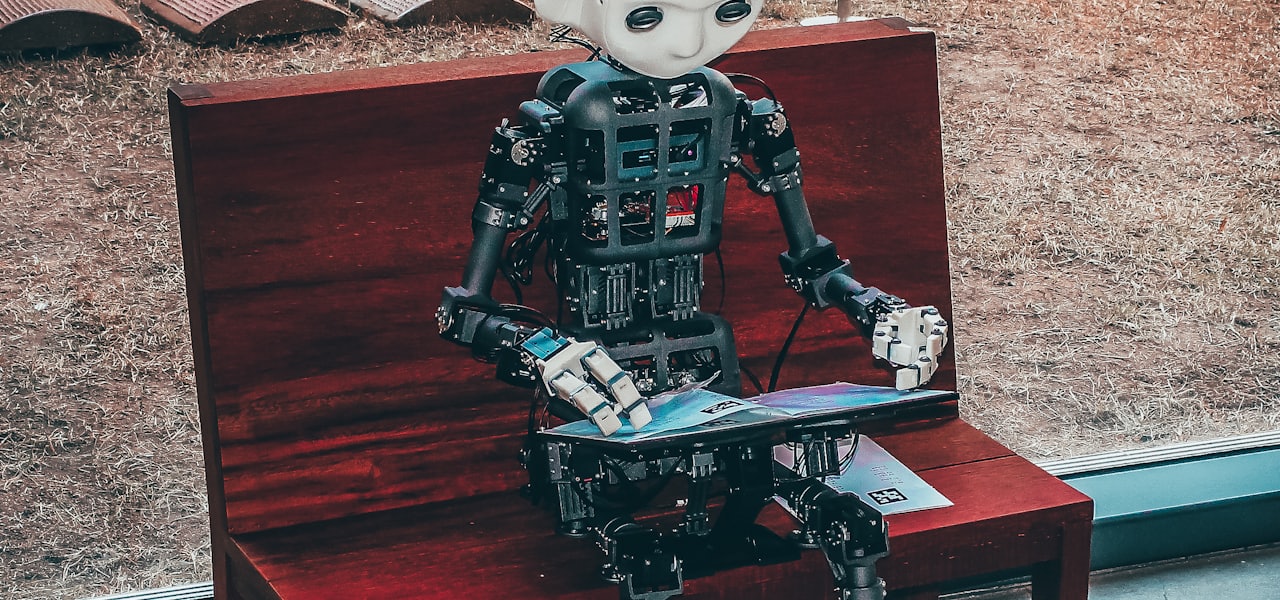
Art Recognition is a Swiss technology company headquartered in Adliswil, within the Zurich metropolitan area, Switzerland. Art Recognition specializes in the application of artificial intelligence (AI) for art authentication and the detection of art forgeries. == Overview == Art Recognition was established in 2019 by Dr. Carina Popovici and Christiane Hoppe-Oehl. Art Recognition employs a combination of machine learning techniques, computer vision algorithms, and deep neural networks to assess the authenticity of artworks. The company's technology undergoes a process of data collection, dataset preparation, and training. === Academic partnerships and grants === Art Recognition has established a relationship with Innosuisse, a Swiss innovation agency, to expand its research and development initiatives. It has also formed a strategic collaboration with Nils Büttner, an art historian and professor at the State Academy of Fine Arts Stuttgart (ABK Stuttgart). === Notable developments === In May 2024, Art Recognition played a key role in identifying counterfeit artworks, including alleged Monets and Renoirs, being sold on eBay. Germann Auction in November 2024 became the first auction house to successfully conduct a sale of artwork authenticated entirely by artificial intelligence. As of January 2025, Art Recognition has appointed art crime expert and Pulitzer Prize finalist Noah Charney as an advisor. === Recognition and debates === The company was featured on the front page of The Wall Street Journal for its involvement in the authentication case of the Flaget Madonna, believed to have been partly painted by Raphael. A broadcast by the Swiss public television SRF covered how the algorithm can be used to detect art forgeries with high accuracy. The technology developed by Art Recognition has been recognized for its role in providing a technology-based art authentication solution, compared to traditional methods. == Controversial cases == Art Recognition's AI algorithm has been applied to several high-profile and controversial artworks, sparking significant interest and debate in the art world. Samson and Delilah at the National Gallery in London: The National Gallery's "Samson and Delilah", traditionally attributed to the artist Rubens, has also been examined using Art Recognition's AI, which has assessed the painting as non-authentic. De Brecy Tondo Madonna. A research team from Bradford University and the University of Nottingham initially attributed the painting to Raphael, employing an AI face recognition software, while the AI developed at Art Recognition returned a negative result. The Bradford group's AI was trained on 49 images, whereas Art Recognition employed a larger dataset of over 100 images. Lucian Freud Painting Controversy: Featured in The New Yorker, a painting attributed to Lucian Freud became a subject of dispute. Art Recognition's AI analysis played a big role in examining the painting's authenticity. Titian at Kunsthaus Zürich: A painting attributed to Titian, housed at Kunsthaus Zürich, has been a topic of debate among art experts. The application of Art Recognition's technology offered a new perspective. Following this debate, Kunsthaus Zürich has announced plans to initiate a comprehensive project aimed at resolving the authenticity questions surrounding the painting. Art Recognition has contributed to the authentication debate surrounding The Polish Rider, a painting traditionally attributed to Rembrandt but subject to scholarly debate.
Light scanning photomacrography
Light Scanning Photomacrography (LSP), also known as Scanning Light Photomacrography (SLP) or Deep-Field Photomacrography, is a photographic film technique that allows for high magnification light imaging with exceptional depth of field (DOF). This method overcomes the limitations of conventional macro photography, which typically only keeps a portion of the subject in acceptable focus at high magnifications. == Historical background == The principles of LSP were first documented in the early 1960s by Dan McLachlan Jr., who highlighted its capability for extreme focal depth in microscopy and in 1968 patented the process. The technique was revived and further developed in the 1980s by photographers such as Darwin Dale and Nile Root, a faculty member at the Rochester Institute of Technology. In the early 1990s, William Sharp and Charles Kazilek, both researchers at Arizona State University, also published articles describing their technique and system setup for capturing SLP images. == Predecessor to stack image photography == Light Scanning Photomacrography offered a powerful analog tool for high-detail imaging in the age of film photography. It provided a comprehensive depth of field, making it invaluable in scientific and biomedical photography. As technology and techniques continue to evolve, LSP has been replaced by digital image focus stacking. This technique uses a collection of images captured in series at different focal depths, which are then processed using computer software to create a single image with a greater focus depth than any single image. == LSP technique and results == LSP involves the use of a thin plane of light that scans across the subject, which is mounted on a stage moving perpendicular to the film plane. The technique utilizes traditional optics and is governed by the physical laws of depth of field. By moving the subject through a narrow band of illumination, the entire subject can be recorded in sharp focus from the nearest details to the farthest ones. This analog process produces sharp and detailed images by slowly recording the image on film as the specimen passes through the sheet of light that is thinner than the effective DOF. Because the image is captured at the same relative distance from the camera lens, the resulting images are axonometric rather than perspective projection, which is what the human eye sees and is typically captured by a film camera. Because all parts of an LSP image are captured at the same distance from the lens, relative measurements can be taken from an LSP photograph and can be used for comparison. == Equipment and setup == A typical LSP setup includes: A stage that can move the subject perpendicular to the film plane. Light sources, in some cases modified projectors, are used to project a thin plane of light. A camera mounted on a stable stand such as a tabletop copy stand. In 1991, Sharp and Kazilek described their SLP system that used three Kodak Ektagraphic slide projectors with zoom lenses to create a thin plane of light. The projectors each had a slide mount with two razor blades placed edge-to-edge to create a thin slit for the light to pass through. The image was captured using a Nikon FE-2 SLR camera mounted above the specimen. Kodachrome 25 slide film was used to record the image and to minimize film grain size and maximize image sharpness == Commercial systems == A commercial SLP instrument was produced by the Irvine Optical Corp. Their DYNAPHOT system was based on a photomacroscope and could capture images on 4x5 film. The instrument came with two or three illumination sources and a motorized specimen stage. The system advertised a 2X – 40X magnification range and the ability to capture images in black and white and color. Other systems have been developed by Nile Root and Theodore Clarke and reported higher magnification (up to 100X). == LSP process == Alignment and Focusing: The light sources are aligned and focused to project a thin, consistent plane of light across the subject. Stage Movement: The subject stage moves at a controlled speed, scanning through the plane of light. Image Capture: The camera shutter is set to a long exposure or can be opened and closed manually. As the subject moves through the illuminated plane, it is recorded on the film. This process is very much like painting an image onto the film using photons instead of paint. == Applications == LSP was particularly useful in biomedical photography, where it was used to document magnified subjects with increased depth of field over traditional macro and micro photography. It has been employed to capture detailed images of biological specimens, such as imaging small insects and their parts. SLP has been used to document shell collections for scientific documentation and research. Other applications include forensic science, mineralogy, and the imaging of fractured surfaces and parts == Advantages and challenges of LSP imaging == === Advantages === Exceptional depth of field: Subjects are rendered in sharp focus throughout. High magnification: Detailed images at significant magnification without sacrificing DOF. Analog precision: Provides a non-digital solution with accurate image representation. Versatility: Can be used for a range of subject sizes, from macro to non-macro scales. === Challenges === Technical complexity: Requires precise setup and alignment. Exposure time: Typically requires long exposure times due to the scanning process. Contrast control: The highly directional lighting can create harsh shadows and high contrast, which may need to be managed. Digital competition: Focus stacking has largely replaced LSP in the digital era due to convenience and flexibility. == DIY contributions == Enthusiasts and researchers have contributed to the development and accessibility of LSP by creating and sharing DIY guides. These contributions have enabled others to build their own LSP systems using readily available materials and components. Nile Root's publications provide detailed instructions and recommendations for constructing an LSP setup. These DIY systems have allowed a wider audience to explore and utilize the benefits of LSP imaging in various fields.
Packard Bell Statesman
The Packard Bell Statesman was an economy line of notebook-sized laptops introduced in 1993 by Packard Bell. They were slower in performance and lacked features compared to most competitor products, but they were lower in price. It was created in a collaboration between Packard Bell and Zenith Data Systems. The Statesman series was essentially a rebrand of Zenith Data Systems Z-Star 433 series, with the only notable difference of the logo in the middle and text on the front bezel. == History == In June 1993 Zenith Data Systems announced an alliance with Packard Bell. Zenith acquired about 20% of Packard Bell and they would both now work together to design and build PC's. Zenith would also provide Packard Bell with private-label versions of their portable PC's. The Packard Bell Statesman was a rebrand of the Zenith Z-Star notebook computer series. While the Statesman was being advertised by Packard Bell, the Z-Star series was also still being sold by Zenith. The Statesman was first introduced on October 4, 1993. Prices started at $1,500 for a monochrome or color DSTN model with a 33 MHz Cyrix Cx486SLC, 4 MB of RAM, 200 MB hard disk drive, internal 1.44 MB floppy disk drive, and MS-DOS 6.0 with Windows 3.1 for the included software. A "J mouse" pointing device was included, similar to the TrackPoint. The Statesman was expected to begin shipping within the next few weeks. == Specifications == === Hardware === CPU The first two models, the 200M and 200C, used the Cyrix Cx486SLC. This was Cyrix's first processor, which was a 386SX pin-compatible chip with on-board L1 cache and 486 instructions, being known as a "hybrid chip". The processor was clocked at 33 MHz and had 1 KB of L1 cache. It was a 16-bit processor and was pin compatible with the Intel 80386SX. On the bottom of the unit, the motherboard had an empty socket for a Cyrix FasMath co-processor, which could improve floating-point math performance. The 200M and 200C plus models had a Cyrix Cx486SLC2 clocked at 50 MHz, which was 50% faster than the original 486SLC. The SLC2 similarly had 1 KB of on-board cache and was pin compatible with the previous model. Graphics & Display For video all models used three versions of the Chips & Technologies 655xx, the CT65520, 65525, and 65530. The 65520 was first introduced in early 1992 as the first controller with Super VGA resolution. It supported resolutions up to 1024x768 in 16 colors or shades of gray. If in 800x600 resolution, it can display up to 256 colors. All 3 chips were the same, with the CT65525 identifying as a CT65530. The CT65530 had an ability of 5V and 3.3V mixed operation and linear video memory addressing. All models used a 9.5in 800x600 resolution DSTN LCD. The 200M and 200M Plus had a monochrome display, while the 200C and 200C Plus had a color display. Audio All models had only basic audio available, with just a piezo speaker soldered onto the motherboard and no sound controller. Memory Standard RAM included was 4-8 MB of EDO RAM. The RAM was on a proprietary SIPP package that could only be upgraded to 12 MB maximum if the user had compatible modules. Storage For storage all models used a hard drive with a size of 100 or 200 MB, and all models had an internal 1.44 MB floppy disk drive located on the side of the unit. The maximum capacity hard drive compatible if the user wanted to upgrade was 500 MB.Ports & Expansion For ports all models had 1x serial, 1x parallel, 1x VGA output, and 1x PS/2 keyboard/mouse input. For expansion all models only had one PCMCIA type II slot. Keyboard & Mouse All models used a small-scale keyboard with control keys. One interesting feature of the keyboard is that the J key also acted as a mouse, working similar to IBM's ThinkPad TrackPoint. On some models additional keys such as S, D, F, G and space let you do other mouse actions such as right click, left click, double click, and middle mouse click. === Software === The series shipped with MS-DOS and Windows 3.1 as the included operating system. == Model Comparison == Statesman 200M — The first Statesman model, it came with a DSTN monochrome screen, and a Nickel-cadmium battery pack which could last up to 4 hours. It weighed 7.4 lb and was $1500. Statesman 200C — The second Statesman model, it was the same as the 200M with the only notable differences of a DSTN color display rather than monochrome and a slightly decreased battery life of about 3 hours. It cost $700 more than the 200M at $2200. Statesman 200M/200C Plus — The 200M/200C Plus were both identical to their previous base models, with the only difference of them having a Cx486SLC2 running at 50 MHz. In 1994 it cost around $2,295 for the 200C plus with 4 MB of ram, with 8 MB costing an extra $400. == Reception == The Statesman received fair reception, with most reviewers giving positivity for the low price and high battery life, but mainly criticizing the performance and screen quality of the model line. A review by PC World writer Rex Farrance and Owen Linderholm said the 200M had a good price, being only $1500, and a good battery life which lasted about 4 hours. In benchmarks however, the 200M performed "noticeably below the average". It was noted that the 200M's worst feature was its monochrome display, being "cloudy and a bit dim for our tastes". The J mouse was considered a decent choice, and was said to be "highly usable" after some practice. The 200M was listed as number 3 on PC World's top 20 budget PC list. PC World also reviewed the 200C, saying the color display is only a "marginal, although an improvement on the monochrome version". The 200C placed 9 on the PC World top 20 budget PC list. Compute! Magazine reviewed the 200C Plus in September 1994 stating it "lagged far behind the others, especially the DXs, but then speed isn't everything". It was given pros for low cost and good display, but criticized for its low performance, not having a trackball, and poor external monitor support.
Push technology
Push technology, also known as server push, is a communication method where the communication is initiated by a server rather than a client. This approach is different from the "pull" method where the communication is initiated by a client. In push technology, clients can express their preferences for certain types of information or data, typically through a process known as the publish–subscribe model. In this model, a client "subscribes" to specific information channels hosted by a server. When new content becomes available on these channels, the server automatically sends, or "pushes," this information to the subscribed client. Under certain conditions, such as restrictive security policies that block incoming HTTP requests, push technology is sometimes simulated using a technique called polling. In these cases, the client periodically checks with the server to see if new information is available, rather than receiving automatic updates. == General use == Synchronous conferencing and instant messaging are examples of push services. Chat messages and sometimes files are pushed to the user as soon as they are received by the messaging service. Both decentralized peer-to-peer programs (such as WASTE) and centralized programs (such as IRC or XMPP) allow pushing files, which means the sender initiates the data transfer rather than the recipient. Email may also be a push system: SMTP is a push protocol (see Push e-mail). However, the last step—from mail server to desktop computer—typically uses a pull protocol like POP3 or IMAP. Modern e-mail clients make this step seem instantaneous by repeatedly polling the mail server, frequently checking it for new mail. The IMAP protocol includes the IDLE command, which allows the server to tell the client when new messages arrive. The original BlackBerry was the first popular example of push-email in a wireless context. Another example is the PointCast Network, which was widely covered in the 1990s. It delivered news and stock market data as a screensaver. Both Netscape and Microsoft integrated push technology through the Channel Definition Format (CDF) into their software at the height of the browser wars, but it was never very popular. CDF faded away and was removed from the browsers of the time, replaced in the 2000s with RSS (a pull system.) Other uses of push-enabled web applications include software updates distribution ("push updates"), market data distribution (stock tickers), online chat/messaging systems (webchat), auctions, online betting and gaming, sport results, monitoring consoles, and sensor network monitoring. == Examples == === Web push === The Web push proposal of the Internet Engineering Task Force is a simple protocol using HTTP version 2 to deliver real-time events, such as incoming calls or messages, which can be delivered (or "pushed") in a timely fashion. The protocol consolidates all real-time events into a single session which ensures more efficient use of network and radio resources. A single service consolidates all events, distributing those events to applications as they arrive. This requires just one session, avoiding duplicated overhead costs. Web Notifications are part of the W3C standard and define an API for end-user notifications. A notification allows alerting the user of an event, such as the delivery of an email, outside the context of a web page. As part of this standard, Push API is fully implemented in Chrome, Firefox, and Edge, and partially implemented in Safari as of February 2023. === HTTP server push === HTTP server push (also known as HTTP streaming) is a mechanism for sending unsolicited (asynchronous) data from a web server to a web browser. HTTP server push can be achieved through any of several mechanisms. As a part of HTML5 the Web Socket API allows a web server and client to communicate over a full-duplex TCP connection. Generally, the web server does not terminate a connection after response data has been served to a client. The web server leaves the connection open so that if an event occurs (for example, a change in internal data which needs to be reported to one or multiple clients), it can be sent out immediately; otherwise, the event would have to be queued until the client's next request is received. Most web servers offer this functionality via CGI (e.g., Non-Parsed Headers scripts on Apache HTTP Server). The underlying mechanism for this approach is chunked transfer encoding. Another mechanism is related to a special MIME type called multipart/x-mixed-replace, which was introduced by Netscape in 1995. Web browsers interpret this as a document that changes whenever the server pushes a new version to the client. It is still supported by Firefox, Opera, and Safari today, but it is ignored by Internet Explorer and is only partially supported by Chrome. It can be applied to HTML documents, and also for streaming images in webcam applications. The WHATWG Web Applications 1.0 proposal includes a mechanism to push content to the client. On September 1, 2006, the Opera web browser implemented this new experimental system in a feature called "Server-Sent Events". It is now part of the HTML5 standard. === Pushlet === In this technique, the server takes advantage of persistent HTTP connections, leaving the response perpetually "open" (i.e., the server never terminates the response), effectively fooling the browser to remain in "loading" mode after the initial page load could be considered complete. The server then periodically sends snippets of JavaScript to update the content of the page, thereby achieving push capability. By using this technique, the client doesn't need Java applets or other plug-ins in order to keep an open connection to the server; the client is automatically notified about new events, pushed by the server. One serious drawback to this method, however, is the lack of control the server has over the browser timing out; a page refresh is always necessary if a timeout occurs on the browser end. === Long polling === Long polling is itself not a true push; long polling is a variation of the traditional polling technique, but it allows emulating a push mechanism under circumstances where a real push is not possible, such as sites with security policies that require rejection of incoming HTTP requests. With long polling, the client requests to get more information from the server exactly as in normal polling, but with the expectation that the server may not respond immediately. If the server has no new information for the client when the poll is received, then instead of sending an empty response, the server holds the request open and waits for response information to become available. Once it does have new information, the server immediately sends an HTTP response to the client, completing the open HTTP request. Upon receipt of the server response, the client often immediately issues another server request. In this way the usual response latency (the time between when the information first becomes available and the next client request) otherwise associated with polling clients is eliminated. For example, BOSH is a popular, long-lived HTTP technique used as a long-polling alternative to a continuous TCP connection when such a connection is difficult or impossible to employ directly (e.g., in a web browser); it is also an underlying technology in the XMPP, which Apple uses for its iCloud push support. === Flash XML Socket relays === This technique, used by chat applications, makes use of the XML Socket object in a single-pixel Adobe Flash movie. Under the control of JavaScript, the client establishes a TCP connection to a unidirectional relay on the server. The relay server does not read anything from this socket; instead, it immediately sends the client a unique identifier. Next, the client makes an HTTP request to the web server, including this identifier with it. The web application can then push messages addressed to the client to a local interface of the relay server, which relays them over the Flash socket. The advantage of this approach is that it appreciates the natural read-write asymmetry that is typical of many web applications, including chat, and as a consequence it offers high efficiency. Since it does not accept data on outgoing sockets, the relay server does not need to poll outgoing TCP connections at all, making it possible to hold open tens of thousands of concurrent connections. In this model, the limit to scale is the TCP stack of the underlying server operating system. === Reliable Group Data Delivery (RGDD) === In services such as cloud computing, to increase reliability and availability of data, it is usually pushed (replicated) to several machines. For example, the Hadoop Distributed File System (HDFS) makes 2 extra copies of any object stored. RGDD focuses on efficiently casting an object from one location to many while saving bandwidth by sending minimal number of copies (only one in the best case) of
Blend4Web
Blend4Web is a free and open source framework for creating and displaying interactive 3D computer graphics in web browsers. == Overview == The Blend4Web framework leverages Blender to edit 3D scenes. Content rendering relies on WebGL, Web Audio, WebVR, and other web standards, without the use of plug-ins. It is dual-licensed. The framework is distributed under the free and open source GPLv3 and, a non-free license - with the source code being hosted on GitHub. A 3D scene can be prepared in Blender and then exported as a pair of JSON and binary files to load in a web application. It can also be exported as a single, self-contained HTML file, in which exported data, the web player GUI, and the engine itself are packed. The HTML option is considered to be the simplest way. The resulting file, which has a minimum size of 1 MB, can be embedded in a web page using a standard iframe HTML element. Blend4Web-powered web applications can be deployed on social networking websites such as Facebook. The Blend4Web toolchain consists of JavaScript libraries, the Blender add-on, and a set of tools for tweaking 3D scene parameters, debugging, and optimization. Developed by Moscow-based company Triumph in 2010, Blend4Web was publicly released on March 28, 2014. At the end of 2017, the project founders Yuri and Alex Kovelenov quit Triumph to start the development of a new WebGL framework Verge3D. In October 2019, an "Absolutely new Blend4Web" was announced, planned to make developing 3D apps easier and to add a new marketplace where people can offer their 3D models. == Features == The framework has a number of components typically found in game engines, including a positional audio system, physics engine (a fork of Bullet ported to JavaScript), animation system, and an abstraction layer for game logic programming. Up to 8 different types of animations can be assigned to a single object, including skeletal and per-vertex animation. The speed and the direction of animation (forward/backward play), as well as particle system parameters (size, initial velocity, and count), can be changed through the API. Among other supported features are: scene data dynamic loading and unloading, subsurface scattering simulation, and image-based lighting. Some out-of-box options exist for rendering extended outdoor environments, including foliage-wind interaction, water, atmosphere, and sunlight simulation. One example demonstrating these effects is "The Farm" tech demo, which also features multiple animated NPCs and the ability to walk, interact with objects and drive a vehicle in first-person mode. Being based on the cross-browser WebGL API, Blend4Web runs in the majority of web browsers, including mobile ones. There are some caveats for browsers with experimental WebGL support, such as Internet Explorer. There are also applications developed to run on Tizen-powered devices such as the Samsung Gear S2 smartwatch. Other features include: draw call batching, hidden surface determination, threaded physics simulation and ocean simulation. In version 14.09, Blend4Web introduced the possibility of adding interactivity to 3D scenes using a visual programming tool. The tool is reminiscent of the BGE's logic editor as it uses logic blocks that are placed inside Blender. It plays back animation tracks authored by an artist when the user interacts with predefined 3D objects. Since version 15.03, Blend4Web has supported attaching HTML elements (such as information windows) to 3D objects ("annotations") and copying objects in run time ("instancing"). The following post-processing effects are supported: glow, bloom, depth of field, crepuscular rays, motion blur, and screen space ambient occlusion. == Virtual reality and augmented reality == Virtual reality devices have been supported since the end of 2015. Specifically, Oculus Rift head-mounted display works over experimental WebVR API. The software also now includes preliminary support for gamepads, based on the Gamepad API. In 2017, the option to author augmented reality content was added. The system is based on the open-source tracking library ARToolKit and uses the WebRTC protocols. Starting from version 17.08, finger tracking is supported through the Leap Motion device. == Blender integration == The Blender add-on is written in Python and C and can be compiled for the Linux x86/x64, OS X x64, and MS Windows x86/x64 platforms. A Blend4Web-specific profile can be activated in the add-on settings. When switching to this profile, the Blender interface changes so that it only reveals settings relevant to Blend4Web. Blend4Web supports a set of Blender-specific features such as the node material editor (a tool for visual shader programming) and the particle system. There is basic support for Blender's non-linear animation (NLA) editor for creating simple scenarios. Blend4Web is based on Blender's real-time GLSL rendering engine, which users are recommended to use in order to enable WYSIWYG editing. == Notable uses == NASA developed an interactive web application called Experience Curiosity to celebrate the 3rd anniversary of the Curiosity rover landing on Mars. This Blend4Web-based app makes it possible to operate the rover, control its cameras and the robotic arm, and reproduce some of the prominent events of the Mars Science Laboratory mission. The application got presented at the beginning of the WebGL section at SIGGRAPH 2015. Experience Curiosity was ported to Verge3D for Blender in 2018 with several performance improvements and bug fixes. A General Motors authorized dealer in the United Arab Emirates has placed a functional Chevrolet Camaro 3D configurator on its website. Greenpeace created interactive 3D infographics to back Greenpeace's Detox campaign in Russia. Tallink featured an interactive 3D presentation of its MS Megastar vessel to allow visitors to browse details of the ship.
Videotex
Videotex (or interactive videotex) was one of the earliest implementations of an end-user information system. From the late 1970s to early 2010s, it was used to deliver information (usually pages of text) to a user in computer-like format, typically to be displayed on a television or a dumb terminal. In a strict definition, videotex is any system that provides interactive content and displays it on a video monitor such as a television, typically using modems to send data in both directions. A close relative is teletext, which sends data in one direction only, typically encoded in a television signal. All such systems are occasionally referred to as viewdata. Unlike the modern Internet, traditional videotex services were highly centralized. Videotex in its broader definition can be used to refer to any such service, including teletext, the Internet, bulletin board systems, online service providers, and even the arrival/departure displays at an airport. This usage is no longer common. With the exception of Minitel in France, videotex elsewhere never managed to attract any more than a very small percentage of the universal mass market once envisaged. By the end of the 1980s its use was essentially limited to a few niche applications. == Initial development and technologies == === United Kingdom === The first attempts at a general-purpose videotex service were created in the United Kingdom in the late 1960s. In about 1970 the BBC had a brainstorming session in which it was decided to start researching ways to send closed captioning information to the audience. As the Teledata research continued the BBC became interested in using the system for delivering any sort of information, not just closed captioning. In 1972, the concept was first made public under the new name Ceefax. Meanwhile, the General Post Office (soon to become British Telecom) had been researching a similar concept since the late 1960s, known as Viewdata. Unlike Ceefax which was a one-way service carried in the existing TV signal, Viewdata was a two-way system using telephones. Since the Post Office owned the telephones, this was considered to be an excellent way to drive more customers to use the phones. Not to be outdone by the BBC, they also announced their service, under the name Prestel. ITV soon joined the fray with a Ceefax-clone known as ORACLE. In 1974, all the services agreed on a standard for displaying the information. The display would be a simple 40×24 grid of text, with some "graphics characters" for constructing simple graphics, revised and finalized in 1976. The standard did not define the delivery system, so both Viewdata-like and Teledata-like services could at least share the TV-side hardware, which was expensive at the time. The standard also introduced a new term that covered all such services, teletext. Ceefax first started operation in 1974 with a limited 30 pages, followed quickly by ORACLE and then Prestel in 1979. By 1981, Prestel International was available in nine countries, and a number of countries, including Sweden, The Netherlands, Finland and West Germany were developing their own national systems closely based on Prestel. General Telephone and Electronics (GTE) acquired an exclusive agency for the system for North America. In the early 1980s, videotex became the base technology for the London Stock Exchange's pricing service called TOPIC. Later versions of TOPIC, notably TOPIC2 and TOPIC3, were developed by Thanos Vassilakis and introduced trading and historic price feeds. === France === Development of a French teletext-like system began in 1973. A very simple 2-way videotex system called Tictac was also demonstrated in the mid-1970s. As in the UK, this led on to work to develop a common display standard for videotex and teletext, called Antiope, which was finalised in 1977. Antiope had similar capabilities to the UK system for displaying alphanumeric text and chunky "mosaic" character-based block graphics. A difference however was that while in the UK standard control codes automatically also occupied one character position on screen, Antiope allowed for "non spacing" control codes. This gave Antiope slightly more flexibility in the use of colours in mosaic block graphics, and in presenting the accents and diacritics of the French language. Meanwhile, spurred on by the 1978 Nora/Minc report, the French government was determined to catch up on a perceived falling behind in its computer and communications facilities. In 1980 it began field trials issuing Antiope-based terminals for free to over 250,000 telephone subscribers in Ille-et-Vilaine region, where the French CCETT research centre was based, for use as telephone directories. The trial was a success, and in 1982 Minitel was rolled out nationwide. === Canada === Since 1970, researchers at the Communications Research Centre (CRC) in Ottawa had been working on a set of "picture description instructions", which encoded graphics commands as a text stream. Graphics were encoded as a series of instructions (graphics primitives) each represented by a single ASCII character. Graphic coordinates were encoded in multiple 6 bit strings of XY coordinate data, flagged to place them in the printable ASCII range so that they could be transmitted with conventional text transmission techniques. ASCII SI/SO characters were used to differentiate the text from graphic portions of a transmitted "page". In 1975, the CRC gave a contract to Norpak to develop an interactive graphics terminal that could decode the instructions and display them on a colour display, which was successfully up and running by 1977. Against the background of the developments in Europe, CRC was able to persuade the Canadian government to develop the system into a fully-fledged service. In August 1978, the Canadian Department of Communications publicly launched it as Telidon, a "second generation" videotex/teletext service, and committed to a four-year development plan to encourage rollout. Compared to the European systems, Telidon offered real graphics, as opposed to block-mosaic character graphics. The downside was that it required much more advanced decoders, typically featuring Zilog Z80 or Motorola 6809 processors. === Japan === Research in Japan was shaped by the demands of the large number of Kanji characters used in Japanese script. With 1970s technology, the ability to generate so many characters on demand in the end-user's terminal was seen as prohibitive. Instead, development focussed on methods to send pages to user terminals pre-rendered, using coding strategies similar to facsimile machines. This led to a videotex system called Captain ("Character and Pattern Telephone Access Information Network"), created by NTT in 1978, which went into full trials from 1979 to 1981. The system also lent itself naturally to photographic images, albeit at only moderate resolution. However, the pages typically took two or three times longer to load, compared to the European systems. NHK developed an experimental teletext system along similar lines, called CIBS ("Character Information Broadcasting Station"). Based on a 388×200 pixel resolution, it was first announced in 1976, and began trials in late 1978. (NHK's ultimate production teletext system launched in 1983). == Standards == Work to establish an international standard for videotex began in 1978 in CCITT. But the national delegations showed little interest in compromise, each hoping that their system would come to define what was perceived to be going to be an enormous new mass-market. In 1980 CCITT therefore issued recommendation S.100 (later T.100), noting the points of similarity but the essential incompatibility of the systems, and declaring all four to be recognised options. Trying to kick-start the market, AT&T Corporation entered the fray, and in May 1981 announced its own Presentation Layer Protocol (PLP). This was closely based on the Canadian Telidon system, but added to it some further graphics primitives and a syntax for defining macros, algorithms to define cleaner pixel spacing for the (arbitrarily sizeable) text, and also dynamically redefinable characters and a mosaic block graphic character set, so that it could reproduce content from the French Antiope. After some further revisions this was adopted in 1983 as ANSI standard X3.110, more commonly called NAPLPS, the North American Presentation Layer Protocol Syntax. It was also adopted in 1988 as the presentation-layer syntax for NABTS, the North American Broadcast Teletext Specification. Meanwhile, the European national Postal Telephone and Telegraph (PTT) agencies were also increasingly interested in videotex, and had convened discussions in European Conference of Postal and Telecommunications Administrations (CEPT) to co-ordinate developments, which had been diverging along national lines. As well as the British and French standards, the Swedes had proposed extending the British Prestel standard with a new se
Social media age verification laws in the United States
In the United States, age verification laws for social media are ostensibly designed to limit young people's access to content deemed problematic such as pornography and to reduce the negative impact of social media on the mental health and well-being of children and adolescents. The purpose and effects of such laws are highly contested. Critics say that these laws suppress free speech by removing online anonymity. They have also stated the laws undermine safety, even for children, by increasing the exposure of user data to breaches, many sites require government IDs and biometric data (such as photographs), often transmitted or secured insecurely and without encryption. They also note that the measures are easily circumvented with VPNs, prompting some states such as Michigan and Wisconsin to propose legislation banning VPNs. == Laws == Many state legislatures have considered or enacted legislation pertaining to young people and social media. In 2022, California passed the California Age-Appropriate Design Code Act (AB 2273) requiring websites that are likely to be used by minors to estimate visitors' ages. On March 23, 2023, Utah Governor Spencer Cox signed SB 152 and HB 311, collectively known as the Utah Social Media Regulation Act, which requires age verification; if a user is under 18, they have to get parental consent before making an account on any social media platform. Few laws have gone into effect partially due to court challenges. === Arkansas === On April 11, 2023, Arkansas enacted SB 396, the Social Media Safety Act. The law requires certain social media companies that make over $100 million per year to verify the age of new users using a third party, and to obtain parental consent for users under 18. It excludes social media companies that allow a user to generate short video clips as well as games. The law was set to go in effect in September 2023. On June 29, 2023, NetChoice sued the Attorney General of Arkansas Tim Griffin in The Western District Court of Arkansas to block enforcement of the law, supported by the American Civil Liberties Union and the Electronic Frontier Foundation (EFF). On July 7, 2023, NetChoice filed a motion for a preliminary injunction to block enforcement of the law. On July 27, Griffin and Tony Allen filed briefs in opposition to the preliminary injunction. The preliminary injunction was granted by Judge Timothy L. Brooks on August 31, reasoning that the law was too vague, that NetChoice's members will suffer irreparable harm if the act goes into effect, and that age restrictions were ineffective. === California === ==== Digital Age Assurance Act (AB 1043) ==== On October 13, 2025, Gavin Newsom signed the Digital Age Assurance Act into law, which requires operating system providers to estimate the age of a user and into 4 age categories: Under 13 13 - 15 16 - 17 18 and over It comes into force on January 1, 2027. ==== California Age-Appropriate Design Code (AB 2273) ==== On September 15, 2022, California enacted AB 2273, the California Age-Appropriate Design Code Act. Its most controversial provisions required online services that are likely to be used by those under 18 to estimate the age of child users with a "reasonable level of certainty". It also required these services to file Data Protection Impact Assessments (DPIAs) certifying whether an online product, service, or feature could harm children, including by exposing them to (potentially) harmful content. The law does not define harmful content. Before the law took effect, EFF sent a veto request to Newsom. On December 14, 2022, NetChoice sued. On September 18, 2023, Federal Judge Beth Labson Freeman granted a preliminary injunction. The 9th Circuit on August 16, 2024, affirmed the injunction against the DPIA section of the law and sent the rest back, because the argument in the 9th circuit was mainly focused on the DPIA. ==== Protecting Our Kids from Social Media Addiction Act (SB 976) ==== On September 20, 2024, California enacted SB 976, Protecting Our Kids from Social Media Addiction. The law requires online platforms to exclude those under 18 from "addictive" feeds unless parental consent is given. It requires online platforms to not send notifications to someone under 18 between 12:00 AM and 6:00 AM without parental consent or between 8:00 am – 3:00 pm without parental consent from September through May (the law does not define what a "notification" is). The law took effect on January 1, 2025, with age verification required as of December 31, 2026. On November 12, NetChoice sued in the Northern District and before Judge Edward John Davila. On December 31, the judge blocked the sections of SB 976 that required time-of-day restrictions. He also enjoined requirements to report on the number of minor users as well as the number of parental assents to access an addictive feed. He did not block the age assurance requirement or blocking minors from seeing addictive feeds without parental consent. His reasoning was that age assurance that runs in the background does not restrict adult access to speech and that regulating feeds does not violate the first amendment because it was content neutral and did not remove any content. On January 1, 2025, NetChoice filed a motion to fully block the law as part of its appeal to the Ninth Circuit. NetChoice claimed that the court erred in its reading of Supreme Court case Moody v. NetChoice by mainly focusing on the concurring opinions and not the deciding opinion. The same day Davila decreed that California's response to NetChoice was due by 11:59 pm. California responded the same day to NetChoice's motion, claiming that the court should not block the full law, claiming that NetChoice had misread Moody v. NetChoice and that NetChoice's members would not likely face any harm from the act because members such as X (formerly Twitter) already offer their members feeds that were not personalized. On January 2, Davila granted NetChoice's motion to block the full law during the appeals process by delaying the effective date of the law from January 1, 2025, to February 1, 2025. That day NetChoice appealed the case to the Ninth Circuit Court of Appeals. === Florida === On January 5, 2024, Tyler Sirois introduced HB 1, which would ban anyone under 16 from using any social media platform and would require platforms to verify the age of users. After the bill passed, the American Civil Liberties Union (ACLU) published a blog post opposing the bill for violating the rights of minors and adults. The bill was vetoed by Governor Ron DeSantis on March 1, 2024, claiming that the State Legislature was going to enact a better alternative. HB 3 then decreased the minimum age from 16 to 14, allowing minors aged 14 and 15 to make social media accounts with parental consent. Florida enacted it on March 25, 2024, and took effect on January 1, 2025. A surge of 1,150% in VPN demand in Florida was detected after the law took effect. VPN services provide the ability to circumvent the law. On October 28, 2024, NetChoice and Computer and Communications Industry Association sued. The Judge is Chief Judge Mark E. Walker. On February 28, 2025, arguments were heard on the motion for a preliminary injunction. Walker seemed skeptical of Florida's argument that the law did not violate the first amendment and said the State would have a hard time to justify a complete ban of youth under 14 from social media. On March 13, Walker denied the motion for a preliminary injunction because the plaintiffs had not proven that at least one of their members had at least 10 percent of their users under 16 use their platform for at least 2 hours per day. Plaintiffs filed an amended complaint and a renewed motion for a preliminary injunction which was granted on June 3, for failing First Amendment Intermediate scrutiny. The injunction left in force the provision that allowed parents to request termination of their child's social media account. === Georgia === On April 23, 2024, Georgia enacted SB 351, which became Act 463. Act 463 requires platforms to verify the age of users of social media platforms and require users under 16 years of age to have parental consent before creating an account. It also requires schools to ban all social media platforms, including YouTube. Before the law was signed NetChoice sent a veto request to Kemp claiming the law was unconstitutional and was bad policy. After the bill was enacted, ACLU and NetChoice criticized the bill. NetChoice sued two months before the law's effective date. The Judge is Amy Totenberg. the suit claims that the law violates the First Amendment and Fourteenth Amendments. === Louisiana === ==== Secure Online Child Interaction and Age Limitation Act (SB 162) ==== On June 28, 2023, Louisiana enacted SB 162, the Secure Online Child Interaction and Age Limitation Act. It requires social media platforms to verify user age and get parental consent for users under 16, prohibits account holders under 1