A knowledge value chain is a sequence of intellectual tasks by which knowledge workers build their employer's unique competitive advantage and/or social and environmental benefit. As an example, the components of a research and development project form a knowledge value chain. Productivity improvements in a knowledge value chain may come from knowledge integration in its original sense of data systems consolidation. Improvements also flow from the knowledge integration that occurs when knowledge management techniques are applied to the continuous improvement of a business process or processes. The term first started coming into common use around 1999, appearing in management-related talks and papers. It was registered as a trademark in 2004 by TW Powell Co., a Manhattan company. Knowledge value chain processes Knowledge acquisition Knowledge storage Knowledge dissemination Knowledge application
Artificial reproduction
Artificial reproduction is the re-creation of life brought about by means other than natural ones. It is new life built by human plans and projects. Examples include artificial selection, artificial insemination, in vitro fertilization, artificial womb, artificial cloning, and kinematic replication. Artificial reproduction is one aspect of artificial life. Artificial reproduction can be categorized into one of two classes according to its capacity to be self-sufficient: non-assisted reproductive technology and assisted reproductive technology. Cutting plants' stems and placing them in compost is a form of assisted artificial reproduction, xenobots are an example of a more autonomous type of reproduction, while the artificial womb presented in the movie the Matrix illustrates a non assisted hypothetical technology. The idea of artificial reproduction has led to various technologies. == Theology == Humans have aspired to create life since immemorial times. Most theologies and religions have conceived this possibility as exclusive of deities. Christian religions consider the possibility of artificial reproduction, in most cases, as heretical and sinful. == Philosophy == Although ancient Greek philosophy raised the concept that man could imitate the creative capacity of nature, classic Greeks thought that if possible, human beings would reproduce things as nature does, and vice versa, nature would do the things that man does in the same way. Aristotle, for example, wrote that if nature made tables, it would make them just as men do. In other words, Aristotle said that if nature were to create a table, such table will look like a human-made table. Correspondingly, Descartes envisioned the human body, and nature, as a machine. Cartesian philosophy does not stop seeing a perfect mirror between nature and the artificial. However, Kant revolutionized this old idea by criticizing such naturalism. Kant pedagogically wrote: "Reason, in order to be taught by nature, must approach nature with its principles in one hand, according to which the agreement among appearances can count as laws, and, in the other hand, the experiment thought out in accord with these principles—in order to be instructed by nature not like a pupil, who has recited to him whatever the teacher wants to say, but like an appointed judge who compels witnesses to answer the questions he puts to them.". Humans are not instructed by nature but rather use nature as raw material to invent. Humans find alternatives to the natural restrictions imposed by natural laws thus, nature is not necessarily mirrored. In accordance with Kant (and contrary to what Aristotle thought) Karl Marx, Alfred Whitehead, Jaques Derrida and Juan David García Bacca noticed that nature is incapable of reproducing tables; or airplanes, or submarines, or computers. If nature tried to create airplanes, it would produce birds. If nature tried to create submarines, it would get fishes. If nature tried to create computers, brains would grow. And if nature tried to create man, modern man, monkeys will be evolved. According to Whitehead, if we look for something natural in artificial life, in the most elaborate cases, if anything, only atoms remain natural. Juan David Garcia Bacca summarized, “It will not come out from wood, it will not be born, a galley; from clay, a vessel; from linen, a dress; from iron, a lever,...From natural, artificial. In the artificial, the natural is reduced to a simple raw material, even though it is perfectly specified with natural specification. The artificial is the real, positive, and original negation of the natural: of species, of genus and of essence. Thus, its ontology is superior to natural ontology. And for this very reason Marx did not attach any importance to Darwin, whose evolutionism is confined to the natural order: to changes, at most, from variety to variety, from species to species... natural. For the same reason, nature has no dialectics, even though continuous evolution and selection can occur. The dialectic cannot emerge from the natural, for deeper reasons than, using today's terms, from a bird, an airplane cannot emerge; from fish, a submarine; from ears, a telephone; from eyes, a television; from a brain, a digital computer; from feet, a car; from hands, an engine; from Euclid, Descartes; from Aristotle, Newton; from Plato, Marx.” According to García Bacca, the major difference between natural causes and artificial causes is that nature does not have plans and projects, while humans design things following plans and projects. In contrast, other influential authors such as Michael Behe have depicted the concept and promoted the idea of intelligent design, a notion that has aroused several doubts and heated controversies, as it reframe natural causes in accordance with a natural plan. Previous ideas that have also provided a positive 'sense' to natural reproduction, are orthogenesis, syntropy, orgone and morphic resonance, among others. Although, these ideas have been historically marginalized and often called pseudoscience, recently Bio-semioticians are reconsidering some of them under symbolic approaches. Current metaphysics of science actually recognizes that the artificial ways of reproduction are diverse from nature, i.e., unnatural, anti-natural or supernatural. Because Biosemiotics does not focus on the function of life but on its meaning, it has a better understanding of the artificial than classic biology. == Science == Biology, being the study of cellular life, addresses reproduction in terms of growth and cellular division (i.e., binary fission, mitosis and meiosis); however, the science of artificial reproduction is not restricted by the mirroring of these natural processes.The science of artificial reproduction is actually transcending the natural forms, and natural rules, of reproduction. For example, xenobots have redefined the classical conception of reproduction. Although xenobots are made of eukariotic cells they do not reproduce by mitosis, but rather by kinematic replication. Such constructive replication does not involve growing but rather building. == Assisted reproductive technologies == Assisted reproductive technology (ART)'s purpose is to assist the development of a human embryo, commonly because of medical concerns due to fertility limitations. == Non-assisted reproductive technologies == Non-assisted reproductive technologies (NART) could have medical motivations but are mostly driven by a wider heterotopic ambition. Although, NARTs are initially designed by humans, they are programed to become independent of humans to a relative or absolute extent. James Lovelock proposed that such novelties could overcome humans. === Artificial cloning === Cloning is the cellular reproductive processes where two or more genetically identical organisms are created, either by natural or artificial means. Artificial cloning normally involves editing the genetic code, somatic cell nuclear transfer and 3D bioprinting. === Non-assisted artificial womb === A non-assisted artificial womb or artificial uterus is a device that allow for ectogenesis or extracorporeal pregnancy by growing an embryonic form outside the body of an organism (that would normally carry the embryo to term) without any human assistance. The aspect of non-assistance is the key distinction between the current artificial womb technology (AWT) in modern medical research, which still relies on human assistance. With this non-assisted hypothetical technology, a zygote or stem cells are used to create an embryo that is then incubated and monitored by artificial intelligence (AI) within a chamber composed of biocompatible material. The AI maintains the necessary conditions for the embryo to develop and thrive, proceeding to mimic organic labor and childbirth in order to best help the embryo adjust to the outside world. Ectogenesis—gestation, depicted in the science fiction movie The Matrix, is a fast approaching reality. This type of innovation presupposes that vertebrate wombs are not the only way for bearing humans or other similar forms of life. === Kinematic replication === Self-replication without binary fission, meiosis, mitosis (or any other form of cellular reproduction that involves division and growing) can be achieved. Xenobots are an example of kinematic replication. They are biobots, named after the African clawed frog (Xenopus laevis). Xenobots are cellular life forms designed by using artificial intelligence to build more of themselves by combining frog cells in a liquid medium. The term kinematic replication is usually reserved for biomolecules (e.g. DNA, RNA, prions, etc.) and artificially designed cellular forms (e.g. xenobots). === Machine constructive replication === Machine constructive replication mimics human traditional manufacturing but is entirely self-automated. Such constructive replication is a more general form of kinematic replication, which does not necessarily
Syman
SYMAN is an artificial intelligence technology that uses data from social media profiles to identify trends in the job market. SYMAN is designed to organize actionable data for products and services including recruiting, human capital management, CRM, and marketing. SYMAN was developed with a $21 million series B financing round secured by Identified, which was led by VantagePoint Capital Partners and Capricorn Investment Group.
Embodied agent
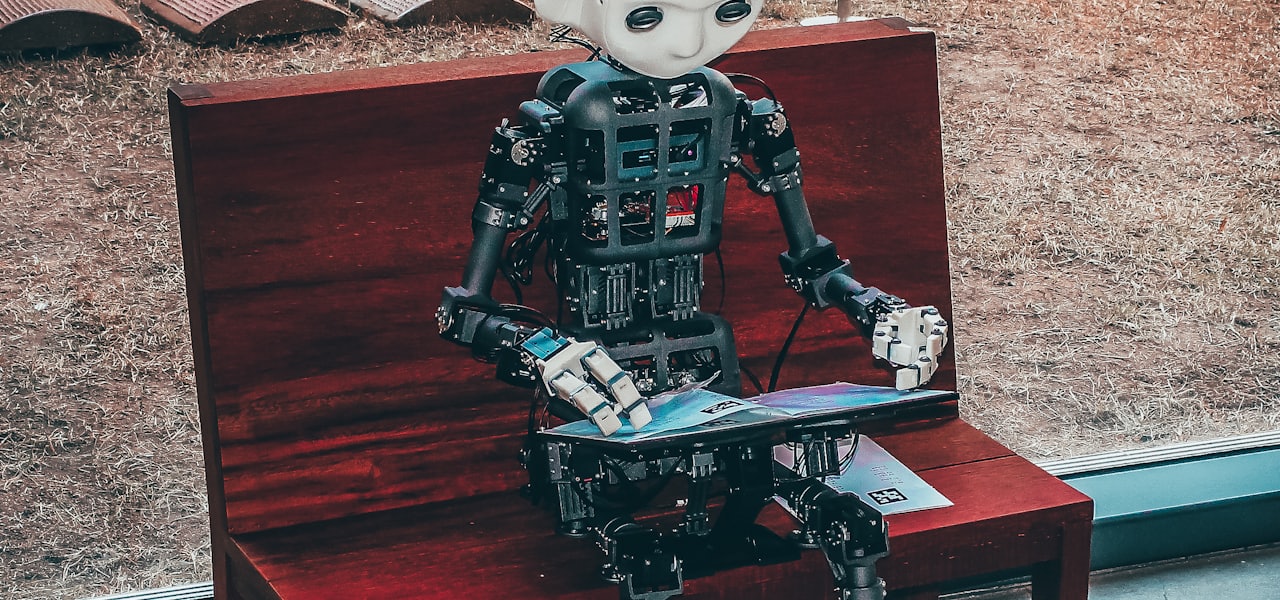
In artificial intelligence, an embodied agent, also sometimes referred to as an interface agent, is an intelligent agent that interacts with the environment through a physical body within that environment. Agents that are represented graphically with a body, for example a human or a cartoon animal, are also called embodied agents, although they have only virtual, not physical, embodiment. A branch of artificial intelligence focuses on empowering such agents to interact autonomously with human beings and the environment. Mobile robots are one example of physically embodied agents; Ananova and Microsoft Agent are examples of graphically embodied agents. Embodied conversational agents are embodied agents (usually with a graphical front-end as opposed to a robotic body) that are capable of engaging in conversation with one another and with humans employing the same verbal and nonverbal means that humans do (such as gesture, facial expression, and so forth). == Embodied conversational agents == Embodied conversational agents are a form of intelligent user interface. Graphically embodied agents aim to unite gesture, facial expression and speech to enable face-to-face communication with users, providing a powerful means of human-computer interaction. == Advantages == Face-to-face communication allows communication protocols that give a much richer communication channel than other means of communicating. It enables pragmatic communication acts such as conversational turn-taking, facial expression of emotions, information structure and emphasis, visualization and iconic gestures, and orientation in a three-dimensional environment. This communication takes place through both verbal and non-verbal channels such as gaze, gesture, spoken intonation and body posture. Research has found that users prefer a non-verbal visual indication of an embodied system's internal state to a verbal indication, demonstrating the value of additional non-verbal communication channels. As well as this, the face-to-face communication involved in interacting with an embodied agent can be conducted alongside another task without distracting the human participants, instead improving the enjoyment of such an interaction. Furthermore, the use of an embodied presentation agent results in improved recall of the presented information. Embodied agents also provide a social dimension to the interaction. Humans willingly ascribe social awareness to computers, and thus interaction with embodied agents follows social conventions, similar to human to human interactions. This social interaction both raises the believably and perceived trustworthiness of agents, and increases the user's engagement with the system. Rickenberg and Reeves found that the presence of an embodied agent on a website increased the level of user trust in that website, but also increased users' anxiety and affected their performance, as if they were being watched by a real human. Another effect of the social aspect of agents is that presentations given by an embodied agent are perceived as being more entertaining and less difficult than similar presentations given without an agent. Research shows that perceived enjoyment, followed by perceived usefulness and ease of use, is the major factor influencing user adoption of embodied agents. A study in January 2004 by Byron Reeves at Stanford demonstrated how digital characters could "enhance online experiences" through explaining how virtual characters essentially add a sense of familiarity to the user experience and make it more approachable. This increase in likability in turn helps make the products better, which benefits both the end users and those creating the product. === Applications === The rich style of communication that characterizes human conversation makes conversational interaction with embodied conversational agents ideal for many non-traditional interaction tasks. A familiar application of graphically embodied agents is computer games; embodied agents are ideal for this setting because the richer communication style makes interacting with the agent enjoyable. Embodied conversational agents have also been used in virtual training environments, portable personal navigation guides, interactive fiction and storytelling systems, interactive online characters and automated presenters and commentators. Major virtual assistants like Siri, Amazon Alexa and Google Assistant do not come with any visual embodied representation, which is believed to limit the sense of human presence by users. The U.S. Department of Defense utilizes a software agent called SGT STAR on U.S. Army-run Web sites and Web applications for site navigation, recruitment and propaganda purposes. Sgt. Star is run by the Army Marketing and Research Group, a division operated directly from The Pentagon. Sgt. Star is based upon the ActiveSentry technology developed by Next IT, a Washington-based information technology services company. Other such bots in the Sgt. Star "family" are utilized by the Federal Bureau of Investigation and the Central Intelligence Agency for intelligence gathering purposes.
Nolot
Nolot is a chess test suite with 11 positions from real games. They were compiled by Pierre Nolot (French: [nɔ.lo]) for the French chess magazine Gambisco and posted on the rec.games.chess Usenet group in 1994. They were designed to be particularly hard to solve for chess engines to solve at the time, although modern engines can find a solution near-instantaneously. == Problem 1 == FEN: r3qb1k/1b4p1/p2pr2p/3n4/Pnp1N1N1/6RP/1B3PP1/1B1QR1K1 w - - 0 1 26.Nxh6!! c3 (26... Rxh6 27.Nxd6 Qh5 (best) 28.Rg5! Qxd1 29.Nf7+ Kg8 30.Nxh6+ Kh8 31.Rxd1 c3 32.Nf7+ Kg8 33.Bg6! Nf4 34.Bxc3 Nxg6 35.Bxb4 Kxf7 36.Rd7+ Kf6 37.Rxg6+ Kxg6 38.Rxb7 ±) 27.Nf5! cxb2 28.Qg4 Bc8 (28... g6!? 29.Kh2! 29.Qd7 30.Nh4 Bc6 31.Nc5! dxc 32.Rxe6 Nf6 33.Nxg6+ Kg7 34.Qg5 Nbd5 35.Ne5 Kh8 36.Nxd7 ±) 29.Qh4+ Rh6 30.Nxh6 gxh6 31.Kh2! Qe5 32.Ng5 Qf6 33.Re8 Bf5 34.Qxh6 (missing a mate in 6: 34.Nf7+ Qxf7 35.Qxh6+ Bh7 36.Rxa8 Nf6 37.Rxf8 Qxf8 38.Qxf8+ Ng8 39.Qg7#) 34...Qxh6 35.Nf7+ Kh7 36.Bxf5+ Qg6 37.Bxg6+ Kg7 38.Rxa8 Be7 39.Rb8 a5 40.Be4+ Kxf7 41.Bxd5+ 1–0 The best Novag computer, the Diablo 68000, finds 26. Nxh6 after seven and a half months (Pierre Nolot has let it run on the position for 14 months and one day, until a power failure stopped an analysis of over 80,000,000,000 nodes.) but for wrong reasons: it evaluates white's position as inferior and thinks this move would enable it to draw. Today Gambit Tiger 2.0 for example can find it quite quickly: Most free engines running on 64-bit processors in 2010 could solve this problem and the others in a few seconds. 1.Qd4 c3 2.Bxc3 Nxc3 3.Qxb4 Nxe4 4.Qxb7 Rb8 5.Qxb8 Qxb8 6.Bxe4 d5 7.Rb1 μ (-1.20) Depth: 12 00:00:09 6055 kN 1.Nxh6 c3 2.Nf5 cxb2 3.Qg4 Rb8 4.Nxg7 Rg6 5.Qxg6 Qxg6 6.Rxg6 Bxg7 7.Nxd6 ³ (-0.48) Depth: 12 00:00:21 14368 kN 1.Nxh6 c3 2.Nf5 cxb2 3.Qg4 Rc8 4.Nxg7 Rg6 5.Nxe8 Rxg4 6.Rxg4 Rxe8 7.Rg6 μ (-0.74) Depth: 13 00:00:55 38455 kN 1.Ne3 Rxe4 2.Bxe4 Qxe4 3.Nxd5 Qxd5 4.Qc1 Qf5 5.Qxh6+ Qh7 6.Qe6 Nd3 7.Re2 Nxb2 8.Rxb2 ³ (-0.58) Depth: 13 00:01:30 62979 kN 1.Ne3 Rxe4 ³ (-0.58) Depth: 14 00:02:02 84941 kN 1.Ne3 Nxe3 2.Rexe3 Bxe4 3.Qg4 Rg6 4.Qxe4 Qxe4 5.Bxe4 Rxg3 6.Rxg3 d5 7.Bf5 Re8 8.Bc3 ³ (-0.30) Depth: 15 00:03:05 128968 kN 1.Nxh6 ² (0.32) Depth: 15 00:07:58 350813 kN With the next ply showing a clear advantage. Stockfish 14dev 64bit 4CPU running on 2020 hardware recognises the significance of Nxh6!! in 1 second. Stockfish_21092606_x64_avx2: NNUE evaluation using nn-13406b1dcbe0.nnue enabled. 19/32 00:01 7708k 4882k +3,00 Nxh6 Rxh6 Nxd6 Qh5 Bg6 Qxd1 Nf7+ Kg8 Nxh6+ gxh6 Bh5+ Kh7 Rxd1 c3 Bxc3 Nxc3 Rd7+ Kh8 Rxb7 Ne4 Re3 Nxf2 Kxf2 Bc5 Ke2 Bxe3 Kxe3 Nd5+ Kf2 49/73 15:02 5118270k 5673k +6,15 Nxh6 Rxh6 Nxd6 Qh5 Rg5 Qxd1 Nf7+ Kg8 Nxh6+ Kh8 Rxd1 c3 Nf7+ Kg8 Bg6 Nf4 Bxc3 Nbd5 Rb1 Bc6 Bd2 Nxg6 Rxg6 Ne7 Rxc6 Nxc6 Rb6 Rc8 Ng5 a5 Ra6 Bb4 Be3 Ne5 Bd4 Nc6 Bb6 Bd2 h4 Kf8 Bc5+ Kg8 Be3 Bxe3 fxe3 Kf8 Kf2 Ke7 Nf3 Kd7 Rb6 Ne7 Rb5 Kd6 Rxa5 Rc2+ Kg3 Re2 Nd4 Rxe3+ Kf4 Rd3 Nf5+ Kc7 Nxe7 == Problem 2 == FEN: r4rk1/pp1n1p1p/1nqP2p1/2b1P1B1/4NQ2/1B3P2/PP2K2P/2R5 w - - 0 1 22.Rxc5!! Nxc5 23.Nf6+ Kh8 24.Qh4 Qb5+ (computers think there is perpetual check here, but...) 25.Ke3! 25... h5 26.Nxh5 Qxb3+ (26... d5+ 27.Bxd5 Qd3 28.Kf2 Ne4+ 29.Bxe4 Qd4+ 30.Kg2 Qxb2+ 31.Kh3 ±) and White won in 41 moves. Today Deep Junior 8.ZX for example finds it very quickly (around 1 minute): 1.Kd1 Rac8 2.Bh6 Qb5 3.Rc3 Qf1+ 4.Kc2 Rc6 5.Bxf8 −+ (-2.11) Depth: 12 00:00:04 10422 kN 1.Nxc5 Nxc5 2.Rxc5 Qxc5 3.e6 Rae8 4.e7 Nc8 5.Kf1 Nxd6 6.Bf6 b5 −+ (-2.10) Depth: 12 00:00:14 25054 kN 1.Bf6! μ (-1.35) Depth: 12 00:00:17 34601 kN 1.Bf6 Qb5+ 2.Ke1 Bb4+ 3.Kf2 Bc5+ = (0.00) Depth: 12 00:00:20 34601 kN 1.Bf6 Qb5+ 2.Ke1 Nxf6 3.Nxf6+ Kg7 4.Nh5+ gxh5 5.Qf6+ Kg8 6.Qg5+ Kh8 7.Qf6+ = (0.00) Depth: 15 00:01:01 130544 kN 1.Rxc5! = (0.15) Depth: 15 00:01:12 145875 kN 1.Rxc5 Nxc5 2.Nf6+ Kh8 3.Qh4 Qb5+ 4.Ke3 h5 5.Nxh5 Qd3+ 6.Kf2 Ne4+ 7.fxe4 Qd4+ 8.Kf1 Qd3+ 9.Ke1 Qb1+ 10.Bd1 ± (2.18) Depth: 15 00:01:18 145875 kN Stockfish 14dev 64bit 4CPU running on 2020 hardware recognises the significance of Rxc5!! in 1 second. Stockfish_21092606_x64_avx2: NNUE evaluation using nn-13406b1dcbe0.nnue enabled. 21/25 00:01 5822k 5545k +6,61 Rxc5 Qxc5 Nxc5 Nxc5 Bh6 Nbd7 Bxf8 Rxf8 Qe3 Rc8 f4 Nxe5 Qxe5 Ne6 Bxe6 Rc2+ Kd3 Rxh2 46/86 11:27 5057055k 7355k +7,61 Rxc5 Qxc5 Nxc5 Nxc5 Bf6 Ne6 Qh6 Nd4+ Kf2 Nf5 Qg5 Nd7 h4 Nxf6 Qxf6 Ng7 d7 b5 Bd5 Rab8 b4 Nh5 Bxf7+ Rxf7 d8R+ Rxd8 Qxd8+ Rf8 Qd5+ Kg7 e6 Kf6 Qd7 Ng7 Qd4+ Kxe6 Qxg7 Rf7 Qc3 Ke7 Qc5+ Ke8 Qc8+ Ke7 h5 gxh5 Kg3 h4+ Kh2 h6 Qc5+ Kf6 Qxb5 Kg7 f4 Rxf4 Qe5+ Rf6 b5 h3 Qd4 Kg8 Qxf6 h5 Blacks 22. .. Nxc5 is suboptimal and leads faster mate 77/44 09:18 6987714k 12518k +M22 Nf6+ Kh8 Qh4 Qb5+ Ke3 Qxb3+ axb3 h5 Nxh5 Nd5+ Kd4 Ne6+ Kxd5 Nxg5 Qxg5 gxh5 f4 Rad8 f5 f6 Qxh5+ Kg7 Qg6+ Kh8 e6 b6 e7 Rb8 exf8Q+ Rxf8 Ke6 b5 Ke7 Rb8 Qh5+ Kg7 Qf7+ Kh8 Kxf6 Rf8 Qxf8+ Kh7 Qg7+ == Problem 3 == FEN: r2qk2r/ppp1b1pp/2n1p3/3pP1n1/3P2b1/2PB1NN1/PP4PP/R1BQK2R w KQkq - 0 1 12.Nxg5!! Bxd1 13.Nxe6 Qb8 14.Nxg7+!! Kf8 15.Bh6! Bg4 16.0-0+ Kg8 17.Rf4 ± White wins with a queen sac but black has defensive resources. Stockfish 8 64bit 3CPU running on 2016 hardware recognizes the significance of Nxg5!! in 55 seconds. Stockfish 14 dev (Stockfish_21092606_x64_avx2) 64bit 4CPU running on 2020 hardware recognizes the significance of Nxg5!! in 1 second. NNUE evaluation using nn-13406b1dcbe0.nnue enabled. 21/34 00:01 8291k 4530k +2,78 Nxg5 Bxd1 Nxe6 Qb8 Nxg7+ Kd8 Kxd1 b5 N3f5 Bf8 Rf1 Kc8 Nh5 Kb7 Bxb5 Ne7 g4 a6 Ba4 Nxf5 gxf5 Ka7 Nf4 c5 47/59 37:49 10390430k 4578k +3,16 Nxg5 Bxd1 Nxe6 Qb8 Nxg7+ Kd8 Kxd1 b5 Rf1 Kc8 N3f5 Bf8 Ne6 Kd7 Nf4 Ne7 g4 a5 Ke2 Qb7 h4 Ra6 a3 Kc8 Be3 Kb8 Kf3 Rb6 Bd2 Qc8 Kg3 c5 Be3 c4 Nxe7 Bxe7 Bf5 Qd8 h5 Qg8 Kh3 Bg5 Rf3 Ra6 Raf1 b4 Nxd5 Qxd5 Bxg5 bxc3 bxc3 Rb6 Be3 Rb3 Blacks 14 .. Kf8 is suboptimal and leads loss fast 41/68 06:31 3269727k 8350k +9,28 Bh6 Kg8 Rxd1 Bf8 N3h5 Bxg7 Nxg7 Qf8 Nf5 Ne7 Bxf8 Nxf5 Bxf5 Rxf8 Be6+ Kg7 Rd3 Rf4 Bxd5 c6 Rg3+ Kf8 Rf3 Rxf3 Bxf3 Kg7 Rf1 Re8 Be4 Re6 Ke2 a5 Ke3 Rh6 h3 a4 Kf4 Re6 h4 Re8 Ke3 h6 h5 Rf8 Rxf8 Kxf8 == Problem 4 == FEN: r1b1kb1r/1p1n1ppp/p2ppn2/6BB/2qNP3/2N5/PPP2PPP/R2Q1RK1 w kq - 0 1 10.Nxe6!! Qxe6 11.Nd5 Kd8 12.Bg4 Qe5 13.f4 Qxe4 (13...Qxb2 stronger but not sufficient: 14.Bxd7 Bxd7 15.Rb1 Qa3 16.Nxf6 Bb5 17.Qd4 Qc5 18.Rfd1 ±) 14.Bxd7 Bxd7 15.Nxf6 gxf6 16.Bxf6+ Kc7 17.Bxh8 and Black resigned on move 27. Stockfish 14dev 64bit 4CPU running on 2020 hardware recognises the significance of 10.Nxe6 in 1 second. Stockfish_21092606_x64_avx2: NNUE evaluation using nn-13406b1dcbe0.nnue enabled. 22/37 00:01 6955k 5367k +4,00 Nxe6 Qxe6 Nd5 Kd8 Bg4 Qe5 f4 Qxb2 Rb1 Qa3 Bxd7 Bxd7 Nxf6 Bb5 Rf3 Qxa2 c4 Bxc4 Rf2 Qa5 Nd5+ f6 Nxf6 Kc7 Rc1 b5 Qd5 gxf6 Bxf6 Kb8 Rxc4 Qe1+ Rf1 51/70 47:10 14538911k 5137k +5,76 Nxe6 Qxe6 Nd5 Kd8 Bg4 Qe5 f4 Qxe4 Bxd7 Bxd7 Nxf6 Qf5 Qd4 Kc8 Nd5 Bc6 c4 f6 Nb6+ Kb8 Bh4 Be7 Rae1 Bd8 Nxa8 Kxa8 Bf2 Kb8 Qxd6+ Bc7 Ba7+ Kc8 Qe6+ Qxe6 Rxe6 h5 h4 Rd8 Re7 g6 Be3 Ba5 Kf2 Rd6 Rc1 Bd8 Rg7 Be4 Rg8 Kd7 c5 Rd3 Rc4 Bd5 Rg7+ Ke6 Rd4 Rxd4 Bxd4 Kf5 Rd7 Bc6 Rxd8 Kxf4 Bxf6 == Problem 5 == FEN: r2qrb1k/1p1b2p1/p2ppn1p/8/3NP3/1BN5/PPP3QP/1K3RR1 w - - 0 1 21.e5!! dxe5 22.Ne4! Nh5 23.Qg6!? (stronger is 23.Qg4!! Nf4 24.Nf3 Qc7 25.Nh4 ± ) 23...exd4? (23...Nf4 24.Rxf4! exf4 25.Nf3! Qb6 26.Rg5!! covering b5 and threatening Nf6 or Ne5-f7+) 24.Ng5 1−0 Stockfish 8 64bit 3CPU running on 2016 hardware recognises the significance of 21.e5 in 5 seconds. Stockfish 12 dev (Stockfish_20062212_x64_modern) 64bit 1CPU running on 2016 hardware recognizes the significance of 21.e5 in 11 seconds. 25/42 00:06 7 963k 1309k +6,93 e5 Nh5 Ne4 dxe5 Nf3 Nf4 Qg4 Qc7 Nh4 Bc6 Nf6 g5 Rxf4 exf4 Qh5 Qe7 Ng6+ Kg7 Nxe7 Rxe7 Ng4 37/62 03:12 298 083k 1545k +10,70 e5 Ng4 Qxg4 Qg5 Qh3 Qxe5 Nde2 g5 Rxf8+ Kg7 Rff1 Rf8 Re1 Qf5 Qg3 Rad8 Nd4 Qf4 Nxe6+ Bxe6 Rxe6 Qxg3 == Problem 6 == FEN: rnbqk2r/1p3ppp/p7/1NpPp3/QPP1P1n1/P4N2/4KbPP/R1B2B1R b kq - 0 1 13... axb5!! offers an exchange to keep the white queen out of play. 14.Qxa8 Bd4 15.Nxd4 cxd4 16.Qxb8 0-0! 17.Ke1 Qh4 18.g3 Qf6 19.Bf4 g5? (Ivanchuk found 19...d3! during post-game analysis.) 20.Rc1 exf4 21.Qxf4 Qd4 22.Rd1 bxc4 23.e5 Qc3+ 24.Rd2 Re8 25.Bxd3 cxd3 −+ Tasc R30 finds 19... d3! in 2 1/2 hours. 19... Bf5!! is even stronger than 19... d3. Position is already lost at 19... d3 +8.00 for black, ... Bf5 not much better Stockfish 14dev 64bit 4CPU running on 2020 hardware recognises the significance of axb5!! in 1 second. Stockfish_21092606_x64_avx2: NNUE evaluation using nn-13406b1dcbe0.nnue enabled. 21/28 00:01 9264k 4714k -1,22 axb5 Qxa8 Bd4 Nxd4 cxd4 h3 Nf6 Bg5 0-0 cxb5 h6 Bxf6 Qxf6 Re1 Nd7 Kd1 Qg6 Qa4 Qg3 Qc2 Qxa3 Bd3 Qxb4 Qb1 46/67 1:05:00 18113493k 4644k -2,40 axb5 Qxa8 Bd4 h3 Nf6 Nxd4 exd4 Kf2 Nxe4+ Kg1 Nd7 Bg5 Qxg5 Qxc8+ Ke7 Qc7 Qe5 d6+ Qxd6 Qxd6+ Kxd6 bxc5+ Ndxc5 cxb5 d3 h4 d2 Rh3 Ke5 Be2 f5 Ra2 Rd8 Bd1 Rd4 Re3 f4 Re2 b6 a4 Kd6 Rc2 Kd5 Ra2 h6 Rb2 Nxa4 Bxa4 Rxa4 Rexd2+ Nxd2 Rxd2+ Kc4 Rd7 g6 == Problem 7 == FEN 1r1bk2r/2R2ppp/p3p3/1b2P2q/4QP2/4N3/1B4PP/3R2K1 w k - 0 1 1.Rxd8+!! Rxd8 (1...Kxd8 2.Ra7! Qe2 3.Qd4+ Ke8 4.h3 Qe1+ 5.Kh2 Rd8 6.Qc5 Qh4 7.Ba3 Rd7 8.Ra8+ Rd8 9.g3 1−0)
Co–Star
Co–Star is an American astrological social networking service founded in 2017, and headquartered in New York City. Users enter the date, time and place they were born to generate an astrological chart and daily horoscopes, which can be compared with those of other users. == History == The concept for Co-Star began in 2015 when Banu Guler created an astrological chart as a gift. The idea later developed into a mobile application with collaborators Anna Kopp and Ben Weitzman. The app publicly launched in 2017. The app includes astrological readings, charts, and daily push notifications that have been noted for their unconventional tone. In early 2018, the company raised a $750,000 pre-seed round from Female Founders Fund. In 2019, Co–Star raised a $5.2 million seed round from Maveron, Aspect, and 14W. In January 2020, Co–Star for Android was launched to a 120,000-person waitlist—two years after their iOS version. In April 2021, the company announced a $15 million Series A, led by Spark Capital. As of that date, Co–Star reported more than 20 million downloads and increased adoption among young women in the United States. == Features == Co–Star employs artificial intelligence to analyze publicly accessible NASA JPL data and find patterns in a user's transits. Co–Star's algorithm maps human-written snippets of text to planetary movements to display personalized content for each user. That content has been called “slightly robotic,” “wildly beautiful,” “truly insane," “brutally honest,” and compared to “a free therapy session.” In July 2023, Co–Star released an in-app service called The Void that allows users to ask open-ended questions and receive answers informed by Co–Star's astrological database.
AI nationalism
AI nationalism is the idea that nations should develop and control their own artificial intelligence technologies to advance their own interests and ensure technological sovereignty. This concept is gaining traction globally, leading countries to implement new laws, form strategic alliances, and invest significantly in domestic AI capabilities. == Global trends and national strategies == In 2018, British technology investor Ian Hogarth published an influential essay titled AI Nationalism. He argued that as AI gains more power and its economic and military significance expands, governments will take measures to bolster their own domestic AI industries, and predicted that the advancement of machine learning systems would lead to what he termed "AI nationalism." He anticipated that this rise in AI would accelerate a global arms race, resulting in more closed economies, restrictions on foreign acquisitions, and limitations on the movement of talent. Hogarth predicted that AI policy would become a central focus of government agendas. He also criticized Britain’s approach to AI strategy, citing the sale of London-based DeepMind—one of the leading AI laboratories, acquired by Google for a relatively modest £400 million in 2014—as a significant misstep. AI nationalism is chiefly reflected in the escalating rhetoric of an artificial intelligence arms race, portraying AI development as a zero-sum game where the winner gains significant economic, political, and military advantages. This mindset, as highlighted in a 2017 Pentagon report, warns that sharing AI technology could erode technological supremacy and enhance rivals' capabilities. The winner-takes-all mentality of AI nationalism poses risks including unsafe AI development, increased geopolitical tension, and potential military aggression (such as cyberattacks or targeting AI professionals). Several countries, including Canada, France, and India, have formulated national strategies to advance their positions in AI. In the United States, a leading player in the global AI arena, trade policies have been enacted to restrict China's access to critical microchips, reflecting a strategic effort to maintain a technological edge. The United States’ National Security Commission on Artificial Intelligence (NSCAI) frames AI development as a critical aspect of a broader technology competition crucial for national success. It emphasizes the need to outpace China in AI to maintain strategic advantage, reflecting AI nationalism by linking geopolitical power directly to advancements in AI. France has seen notable governmental support for local AI startups, particularly those specializing in language technologies that cater to French and other non-English languages. In Saudi Arabia, Crown Prince Mohammed bin Salman is investing billions in AI research and development. The country has actively collaborated with major technology firms such as Amazon, IBM, and Microsoft to establish itself as a prominent AI hub. == Historical and cultural context == AI nationalism is seen as deeply connected to historical racism and imperialism. It is viewed not merely as a technological competition but as a contest over racial and civilizational superiority. Historically, technological achievements were often used to justify colonialism and racial hierarchies, with Western societies perceiving their advancements as evidence of superiority. In the context of AI, this historical context continues to shape views on intelligence and development. Some argue that AI nationalism reinforces the idea of fundamental civilizational divides, especially between the Western world and China. This perspective often frames China's progress in AI as a direct challenge to Western values, presenting the AI competition as a struggle over values. AI nationalism is said to draw from long-standing anti-Asian stereotypes, such as the "Yellow Peril," which portray Asian nations as threats to Western civilization. This viewpoint links Asian technological advances with dehumanization and artificiality, reflecting persistent anxieties about China's growing role in the global tech landscape. == Implications == AI nationalism is seen as a component of a broader trend towards the fragmentation of the internet, where digital services are increasingly influenced by local regulations and national interests. This shift is creating a new technological landscape in which the impact of artificial intelligence on individuals' lives can vary significantly depending on their geographic location. J. Paul Goode argues that AI nationalism may exacerbate existing societal divisions by promoting the development of systems that embed cultural biases, thereby privileging certain groups while disadvantaging others.